


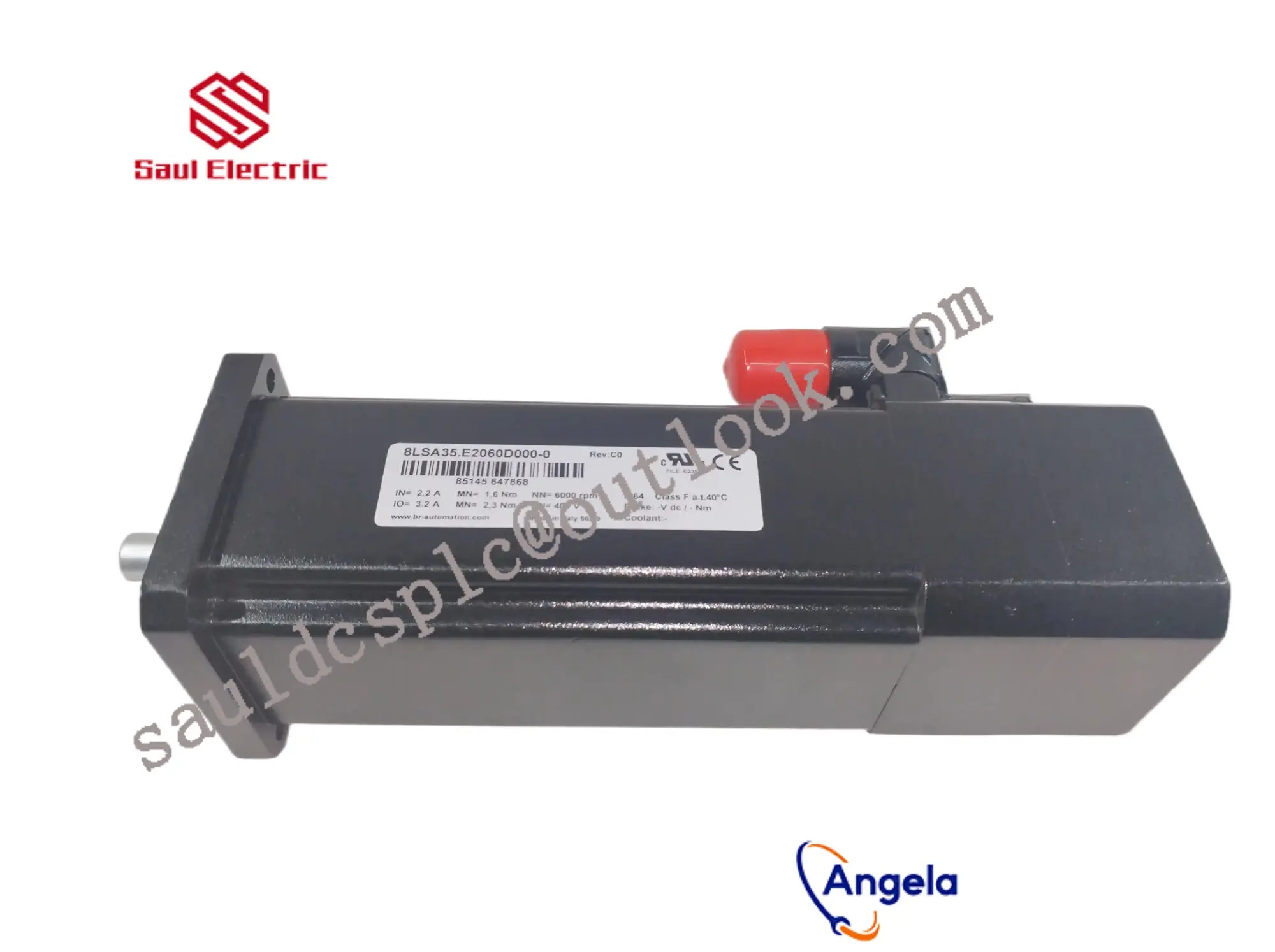
Description
I. Brand Background
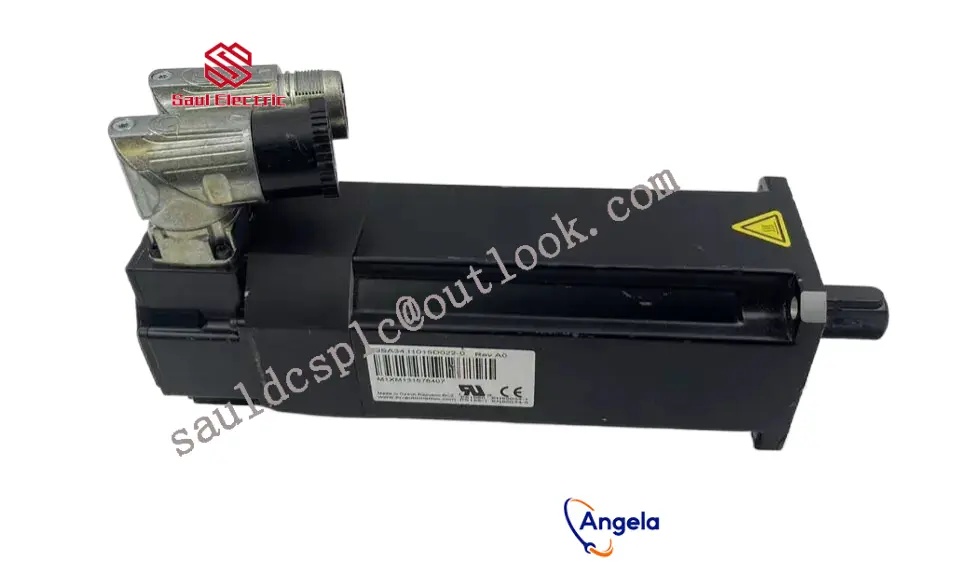
II. Product Features
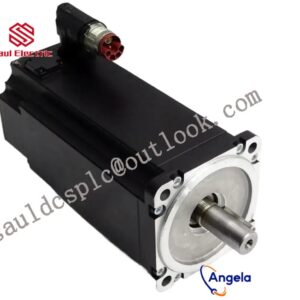
- High Performance: The 8MSA4M.E1-46 servo motor offers high precision, rapid response, and excellent stability, meeting the demands of various complex automation applications.
- Integrated Safety Technology: B&R”s servo motors incorporate advanced safety technologies, such as the openSAFETY standard,
- ensuring the safety of operators while supporting machine functionality. This safety technology adapts to changing configurations and operates reliably worldwide.
- Easy Management: With intelligent safety response capabilities, the 8MSA4M.E1-46 servo motor simplifies machine option management without compromising safety levels.
- This helps reduce downtime risks and enhance production efficiency.
- Networked Collaboration: B&R”s integrated, networked safety technology enables coordinated responses to safety events across the entire production line.
- The use of safety standards like openSAFETY ensures secure communication and interoperability between devices from different manufacturers.
- Powerful Software Support: B&R”s Automation Studio software development platform provides robust support for configuring, commissioning,
- and maintaining servo motors. Users can easily accomplish various automation tasks through this platform.
III. Application Areas
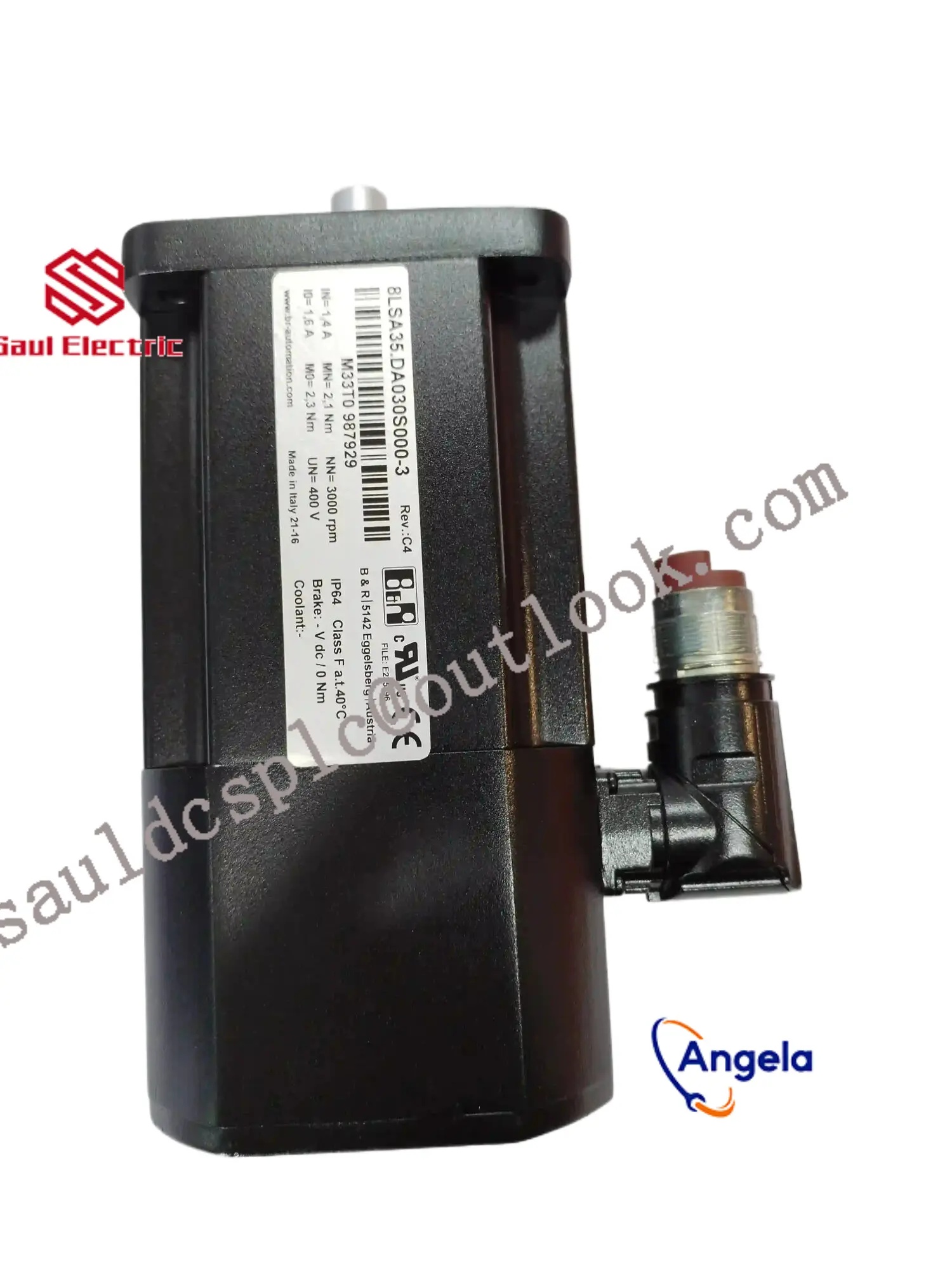
IV. Product Advantages
- Genuine Products: The 8MSA4M.E1-46 servo motor is manufactured in Austria, ensuring product quality and performance.
- Professional Services: B&R has a professional technical support and after-sales service team capable of providing timely and efficient technical support and solutions to users.
- Customization Options: B&R offers customized servo motor solutions to meet the specific needs of different users.
3742b696-666a-11ee-939d-92fbcf53809c.jpg
① Rotate counterclockwise from the initial state
Coil A is at the top, connect the power supply to the brush, and set the left side as (+) and the right side as (-). A large current flows from the
left brush through the commutator to coil A. This is the structure where the upper (outer) part of coil A becomes the S pole.
Due to half of the current in coil A flowing from the left brush to coils B and C in the opposite direction to coil A, the outer sides of coils B and C become weak N-poles (indicated by slightly smaller letters in the figure).
The magnetic fields generated in these coils, as well as the repulsive and attractive effects of the magnets, cause the coils to experience a counterclockwise rotational force.
② Further counterclockwise rotation
Next, assuming that coil A rotates counterclockwise by 30 °, the right electric brush comes into contact with two commutators.
The current of coil A continues to flow from the left brush to the right brush, and the outer side of the coil maintains the S pole.
The same current as coil A flows through coil B, and the outer side of coil B becomes a stronger N-pole.
Due to the electric brush short circuiting at both ends of coil C, no current flows and no magnetic field is generated.
Even in this situation, there will be a force of counterclockwise rotation.
The upper coil from ③ to ④ continues to receive a leftward force, while the lower coil continues to receive a rightward force and continues to rotate counterclockwise
When the coil rotates every 30 ° to states ③ and ④, and is located above the central horizontal axis, the outer side of the coil becomes the S pole;
When the coil is located below, it becomes N-pole and this motion is repeated.
In other words, the upper coil is repeatedly subjected to a force that moves to the left, while the lower coil is repeatedly subjected to a force
that moves to the right (both counterclockwise). This causes the rotor to always rotate counterclockwise.
If the power supply is connected to the opposite left brush (-) and right brush (+), opposite magnetic fields will be generated in the coil,
so the direction of the force applied to the coil will also be opposite, becoming clockwise rotation.
In addition, when the power is disconnected, the rotor of the brushed motor will stop rotating due to the absence of a magnetic field that allows it to continue rotating.