


Description
I. Brand Background
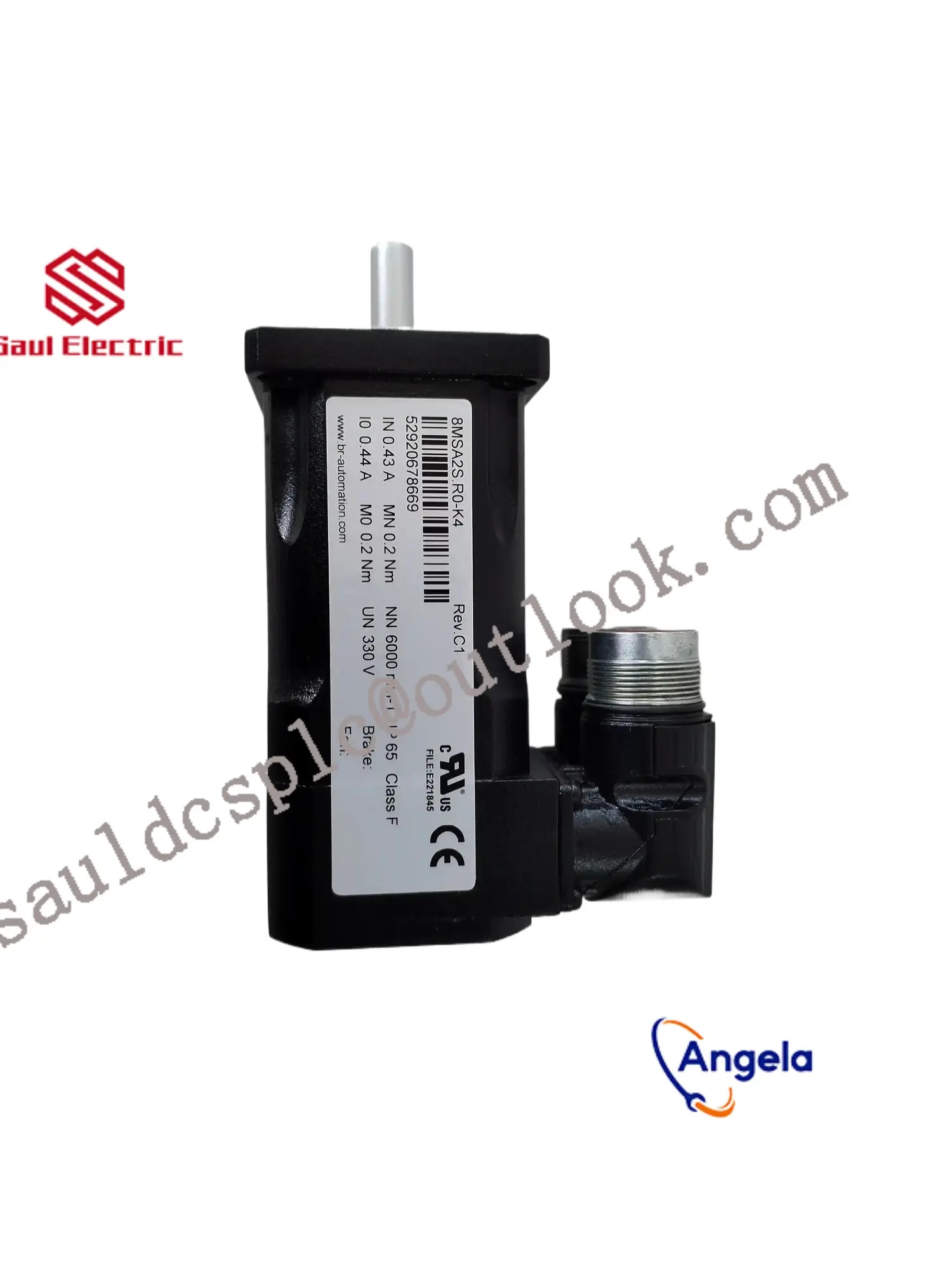
II. Product Features
- High Performance: The 8MSA5L.E2-D200-1 servo motor offers high precision, rapid response, and excellent stability, meeting the demands of various complex automation applications.
- Integrated Safety Technology: B&R”s servo motors incorporate advanced safety technologies, such as the openSAFETY standard,
- ensuring the safety of operators while supporting machine functionality. This safety technology adapts to changing configurations and operates reliably worldwide.
- Easy Management: With intelligent safety response capabilities, the 8MSA5L.E2-D200-1 servo motor simplifies machine option management without compromising safety levels.
- This helps reduce downtime risks and enhance production efficiency.
- Networked Collaboration: B&R”s integrated, networked safety technology enables coordinated responses to safety events across the entire production line.
- The use of safety standards like openSAFETY ensures secure communication and interoperability between devices from different manufacturers.
- Powerful Software Support: B&R”s Automation Studio software development platform provides robust support for configuring, commissioning,
- and maintaining servo motors. Users can easily accomplish various automation tasks through this platform.
III. Application Areas
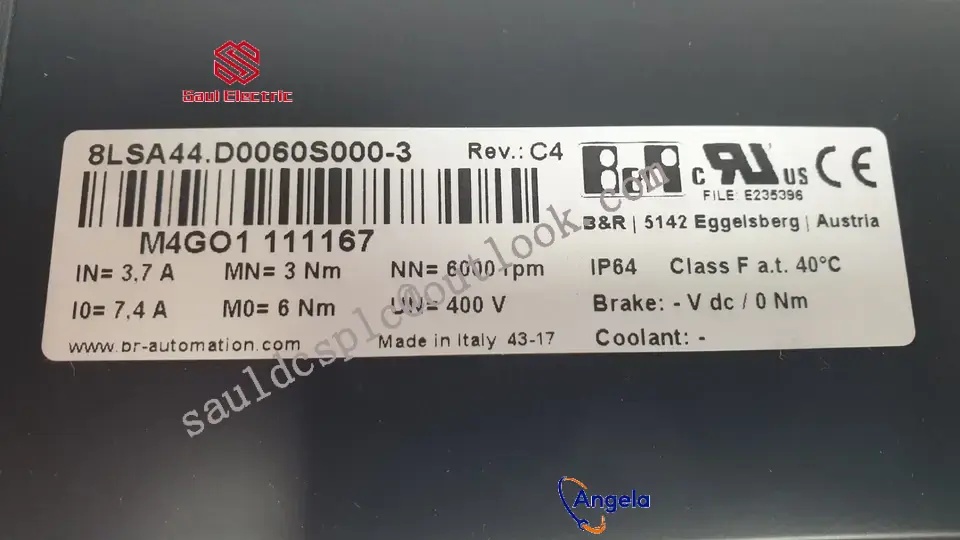
IV. Product Advantages
- Genuine Products: The 8MSA5L.E2-D200-1 servo motor is manufactured in Austria, ensuring product quality and performance.
- Professional Services: B&R has a professional technical support and after-sales service team capable of providing timely and efficient technical support and solutions to users.
- Customization Options: B&R offers customized servo motor solutions to meet the specific needs of different users.
In the field of motor technology, BLDC motor (brushless DC motor) and DD motor (direct drive motor) are two types of driving devices with their own characteristics.
They have significant differences in design, working principles, performance, and application areas. Below, we will conduct a detailed comparative analysis of these two types of motors.
1、 Overview of BLDC Motor
BLDC motor, also known as brushless direct current motor, also known as electronic commutation motor (ECM or EC motor) or synchronous DC motor.
It is essentially a permanent magnet synchronous motor that uses a DC power input and converts it into a three-phase AC power supply through an inverter.
The BLDC motor controls the magnetic field of the motor through an electronic controller to achieve contactless commutation,
and has the characteristics of high efficiency, high reliability, low noise, and good control performance.
Working Principle:
BLDC motors use electronic commutators instead of traditional carbon brush commutators to achieve contactless commutation.
The rotor usually uses permanent magnets, while the stator is composed of coils.
Control requires understanding the rotor position and mechanism of the motor for rectification and steering, and may require the use
of Hall effect sensors to sense the rotor position.
Design features:
The brushless design reduces maintenance costs and wear.
Contactless commutation improves the efficiency of the motor.
High reliability, electronic commutator reduces the possibility of mechanical failure.
Low noise, brushless design reduces noise.
It has good control performance and can achieve precise speed and position control.
Application fields:
Industrial automation: such as robots, conveyor belts, etc.
Household appliances: such as fans, vacuum cleaners, washing machines, etc.
Transportation: such as electric bicycles, electric scooters, etc.
Aerospace: such as drones, satellites, etc.
2、 Overview of DD motor
DD motor, also known as direct drive motor, is a type of motor that directly connects the rotor of the motor to the load. It eliminates intermediate links such as gears and
belts in traditional transmission systems, directly transmitting the rotational force of the motor to the load. DD motors have the characteristics of high precision, high rigidity,
high response speed, and simple maintenance.
Working Principle:
The rotor of DD motor is directly connected to the load, eliminating the intermediate transmission link.
Due to the absence of transmission losses, DD motors can achieve high-precision position control.
Design features:
No intermediate transmission reduces transmission losses and improves efficiency.
High precision, due to the absence of transmission links, high-precision position control can be achieved.
High rigidity, directly driving the structure improves the rigidity of the system.
Easy to maintain, due to its simple structure, the maintenance cost is relatively low.
High response speed, directly driving the structure improves the system”s response speed.
Application fields:
Numerical Control Machine Tool: Used to achieve high-precision cutting processing.
Semiconductor equipment: used for precise control of the position of wafers.
Medical equipment: high-precision medical devices such as CT scanners, MRI, etc.
Astronomical telescope: used for precise control of the pointing of the telescope.
3、 Comparison between BLDC motor and DD motor
Efficiency:
BLDC motors have high efficiency due to contactless commutation.
DD motors have relatively high efficiency due to the absence of transmission losses. Both perform similarly in terms of efficiency.
Maintenance cost:
BLDC motors have lower maintenance costs due to the removal of carbon brushes.
DD motors have a simple structure and low maintenance costs. Both perform similarly in terms of maintenance costs.
Control performance:
BLDC motors can achieve precise speed and position control through electronic controllers.
Due to its direct drive structure, DD motors can achieve high-precision position control. In terms of control performance, DD motors have advantages.
Application fields:
BLDC motors have applications in multiple fields due to their wide applicability.
DD motors are more focused on situations that require high precision, high rigidity, and high response speed.
Summary:
BLDC motors and DD motors each have their own unique features. BLDC motors have been widely used in household appliances, transportation and other fields due to their high efficiency,
low noise and good control performance. DD motors have demonstrated outstanding performance in fields such as CNC machine tools and medical equipment due to their high precision, rigidity,
and response speed. When choosing a motor, comprehensive consideration should be given to specific application requirements and environmental conditions to select the most suitable motor type.