


Description
I. Brand Background
II. Product Features
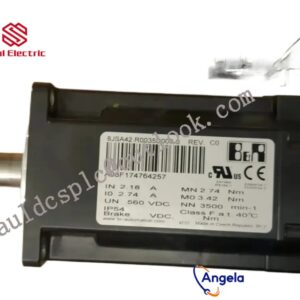
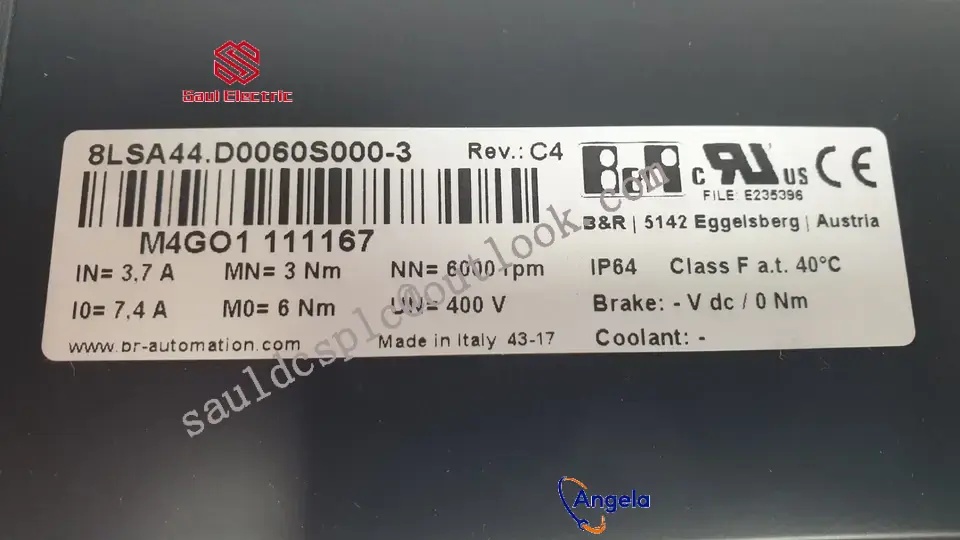
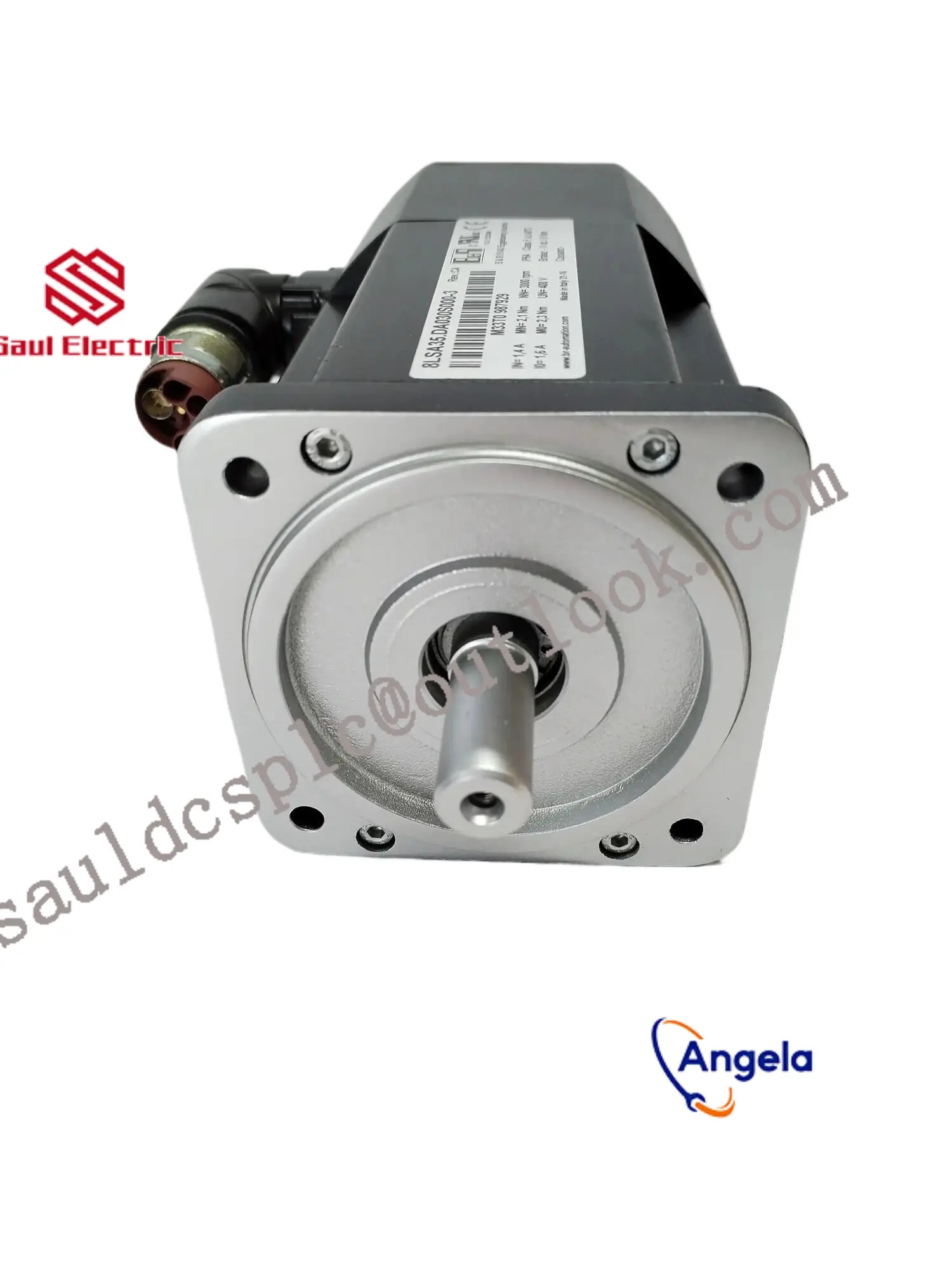
- High Performance: The 8LSA73.S1030D123-1 servo motor offers high precision, rapid response, and excellent stability, meeting the demands of various complex automation applications.
- Integrated Safety Technology: B&R”s servo motors incorporate advanced safety technologies, such as the openSAFETY standard,
- ensuring the safety of operators while supporting machine functionality. This safety technology adapts to changing configurations and operates reliably worldwide.
- Easy Management: With intelligent safety response capabilities, the 8LSA73.S1030D123-1 servo motor simplifies machine option management without compromising safety levels.
- This helps reduce downtime risks and enhance production efficiency.
- Networked Collaboration: B&R”s integrated, networked safety technology enables coordinated responses to safety events across the entire production line.
- The use of safety standards like openSAFETY ensures secure communication and interoperability between devices from different manufacturers.
- Powerful Software Support: B&R”s Automation Studio software development platform provides robust support for configuring, commissioning,
- and maintaining servo motors. Users can easily accomplish various automation tasks through this platform.
III. Application Areas
IV. Product Advantages
- Genuine Products: The 8LSA73.S1030D123-1 servo motor is manufactured in Austria, ensuring product quality and performance.
- Professional Services: B&R has a professional technical support and after-sales service team capable of providing timely and efficient technical support and solutions to users.
- Customization Options: B&R offers customized servo motor solutions to meet the specific needs of different users.
Join the communication group
1. Introduction
In the field of motors, power frequency motors and variable frequency motors are two common types, each with different working principles and application scenarios. Power frequency
motors mainly rely on a constant power frequency (usually 50Hz or 60Hz) for operation, while variable frequency motors can adjust the power frequency according to actual needs to
achieve variable speed control. This article will provide a detailed distinction between power frequency motors and variable frequency
motors from multiple perspectives to help readers better understand and choose the appropriate motor type.
2、 Definition and Principle
line-frequency motor
A power frequency motor, also known as a synchronous speed motor, refers to an AC motor that operates at a power frequency of 50Hz or 60Hz. The “power frequency” in its
name refers to the frequency of the power supply on which this motor depends. The working principle of a power frequency motor is based on electromagnetic induction. Through the interaction between the
rotating magnetic field generated by the stator and the current in the rotor, torque is generated to drive the motor to rotate.
Variable Frequency Motor
Variable frequency motor is a type of motor that can adjust the power frequency within a certain range. It uses a frequency converter to convert a constant power frequency into
a variable frequency, thereby achieving precise control of motor speed. The principle of variable frequency motor is also based on electromagnetic induction, but compared with
power frequency motor, it adds the key component of frequency converter to achieve frequency regulation.
3、 Main differences
Working principle and performance
Power frequency motor: operates at a constant power frequency, with relatively fixed speed and torque. Due to its relatively simple structure, power frequency motors have high reliability
and low maintenance costs. However, its speed and torque are difficult to control and adjust, with low accuracy, making it unsuitable for applications that require high-precision control.
Variable frequency motor: By adjusting the power frequency through a frequency converter, precise control of speed and torque can be achieved. Variable frequency motors have higher flexibility
and adaptability, and can meet the needs of various complex working conditions. In addition, variable frequency motors also have advantages such as energy saving, high efficiency, and low noise.
Structure and Design
Power frequency motor: usually adopts standard design, simple structure, and low manufacturing cost. However, due to the fixed speed and torque, its application range is relatively limited.
Variable frequency motor: In order to meet the requirements of variable frequency speed regulation, the structure of the variable frequency motor has been specially designed. For example, using high-performance insulation materials and thermal conductive materials to improve the heat resistance and heat dissipation performance of the motor; Optimize electromagnetic design and rotor structure to
improve the efficiency and performance of the motor. These special designs make the variable frequency motor structurally more complex, but with superior performance.
Application field
Power frequency motor: Due to its simple structure, high reliability, and low cost, power frequency motors are widely used in various fields. For example, in applications that require
low precision control such as mechanical manufacturing, water pumps, fans, compressors, etc., power frequency motors play an important role.
Variable frequency motor: With the continuous improvement of product quality and efficiency requirements, more and more applications require higher precision and control performance.
Therefore, variable frequency motors have gradually replaced power frequency motors as the mainstream. Variable frequency motors are widely used in applications that require high-precision control,
such as steel, petroleum, chemical, power, transportation, and other fields.
Energy conservation and environmental protection
Power frequency motor: operates at a constant power frequency, with relatively fixed energy consumption and efficiency. Due to the non adjustability of speed and torque,
power frequency motors may experience high energy consumption under certain operating conditions.
Variable frequency motor: By adjusting the power frequency through a frequency converter, the optimal operating state of the motor can be achieved. Variable frequency motors
can adjust their speed and torque according to actual operating conditions, thereby achieving the goal of energy conservation and consumption reduction. In addition, variable frequency motors
also have advantages such as low noise and low vibration, which are beneficial for improving the working environment and reducing noise pollution.
4、 Summary
In summary, there are significant differences between power frequency motors and variable frequency motors in terms of working principles, performance, structure, application areas,
and energy conservation and environmental protection. Power frequency motors are widely used in various fields due to their simple structure, high reliability, and low cost; Variable frequency
motors have gradually become the mainstream choice due to their advantages of high-precision control, high efficiency, and energy saving. When choosing the type of motor, comprehensive
consideration should be given to the actual needs and working conditions to select the most suitable motor type