


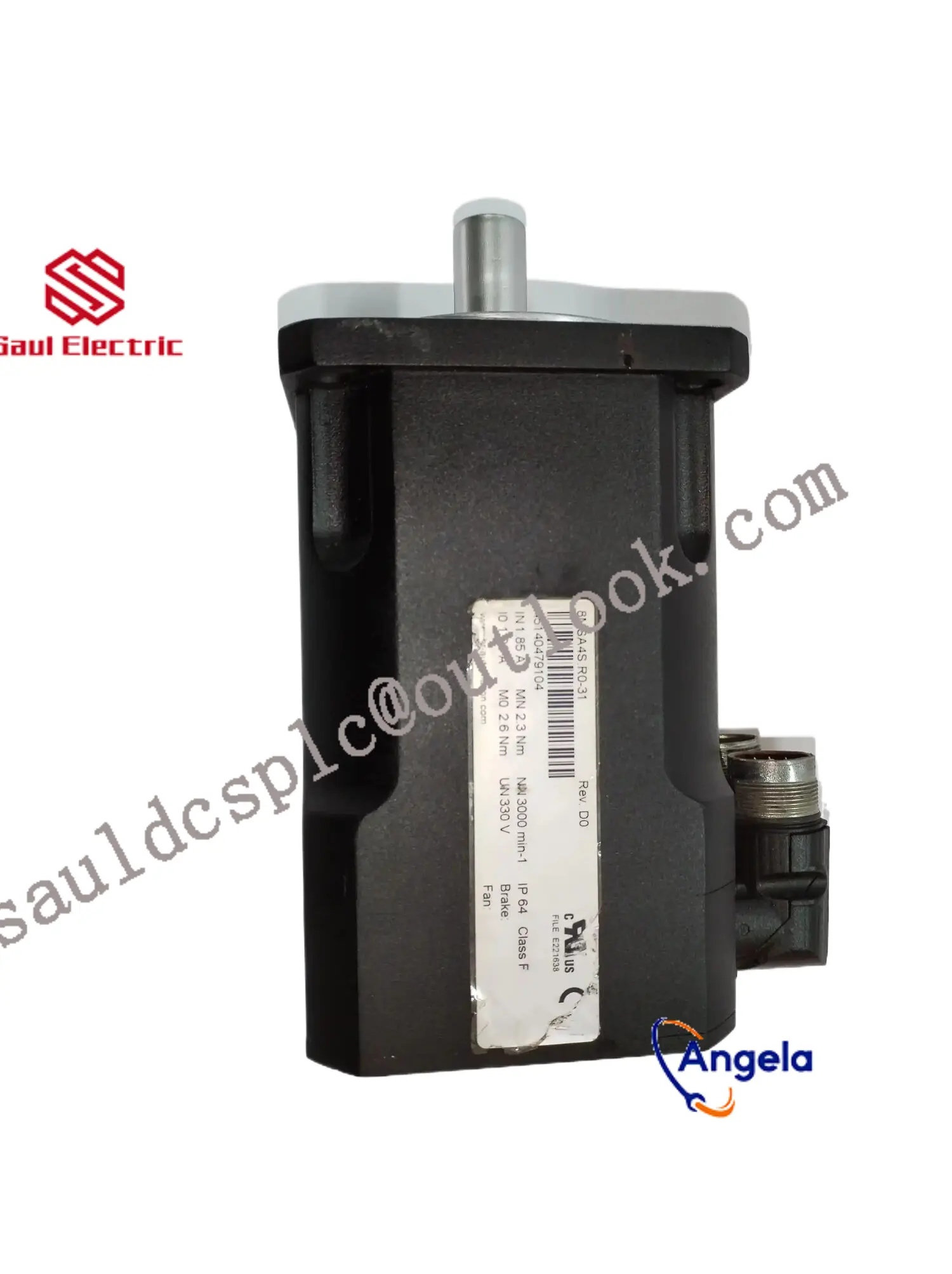
Description
I. Brand Background
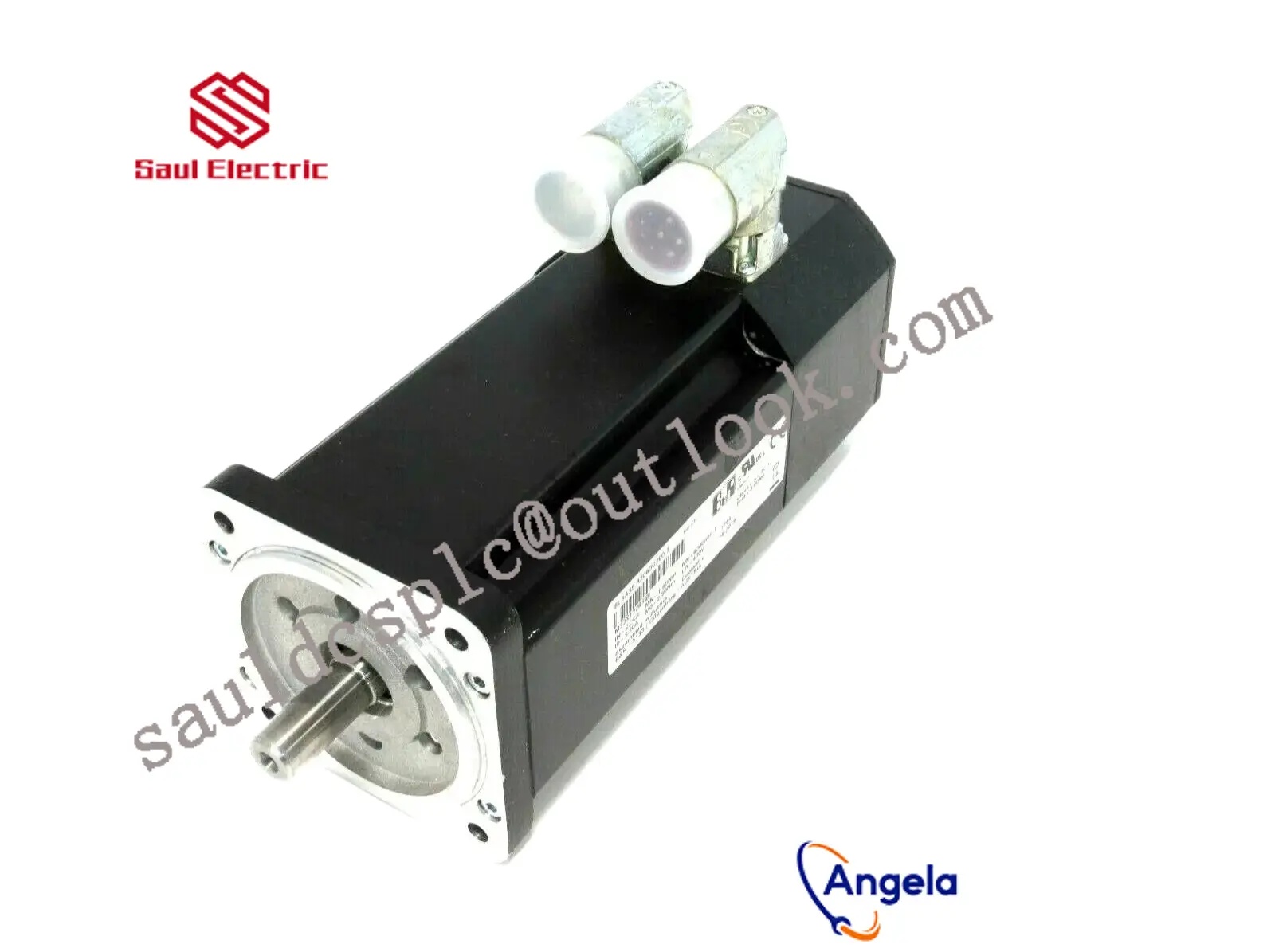
II. Product Features
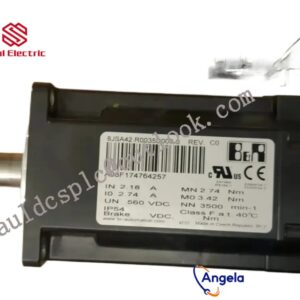
- High Performance: The 8LSA54.E0022D0 00-0 servo motor offers high precision, rapid response, and excellent stability, meeting the demands of various complex automation applications.
- Integrated Safety Technology: B&R”s servo motors incorporate advanced safety technologies, such as the openSAFETY standard,
- ensuring the safety of operators while supporting machine functionality. This safety technology adapts to changing configurations and operates reliably worldwide.
- Easy Management: With intelligent safety response capabilities, the 8LSA54.E0022D0 00-0 servo motor simplifies machine option management without compromising safety levels.
- This helps reduce downtime risks and enhance production efficiency.
- Networked Collaboration: B&R”s integrated, networked safety technology enables coordinated responses to safety events across the entire production line.
- The use of safety standards like openSAFETY ensures secure communication and interoperability between devices from different manufacturers.
- Powerful Software Support: B&R”s Automation Studio software development platform provides robust support for configuring, commissioning,
- and maintaining servo motors. Users can easily accomplish various automation tasks through this platform.
III. Application Areas
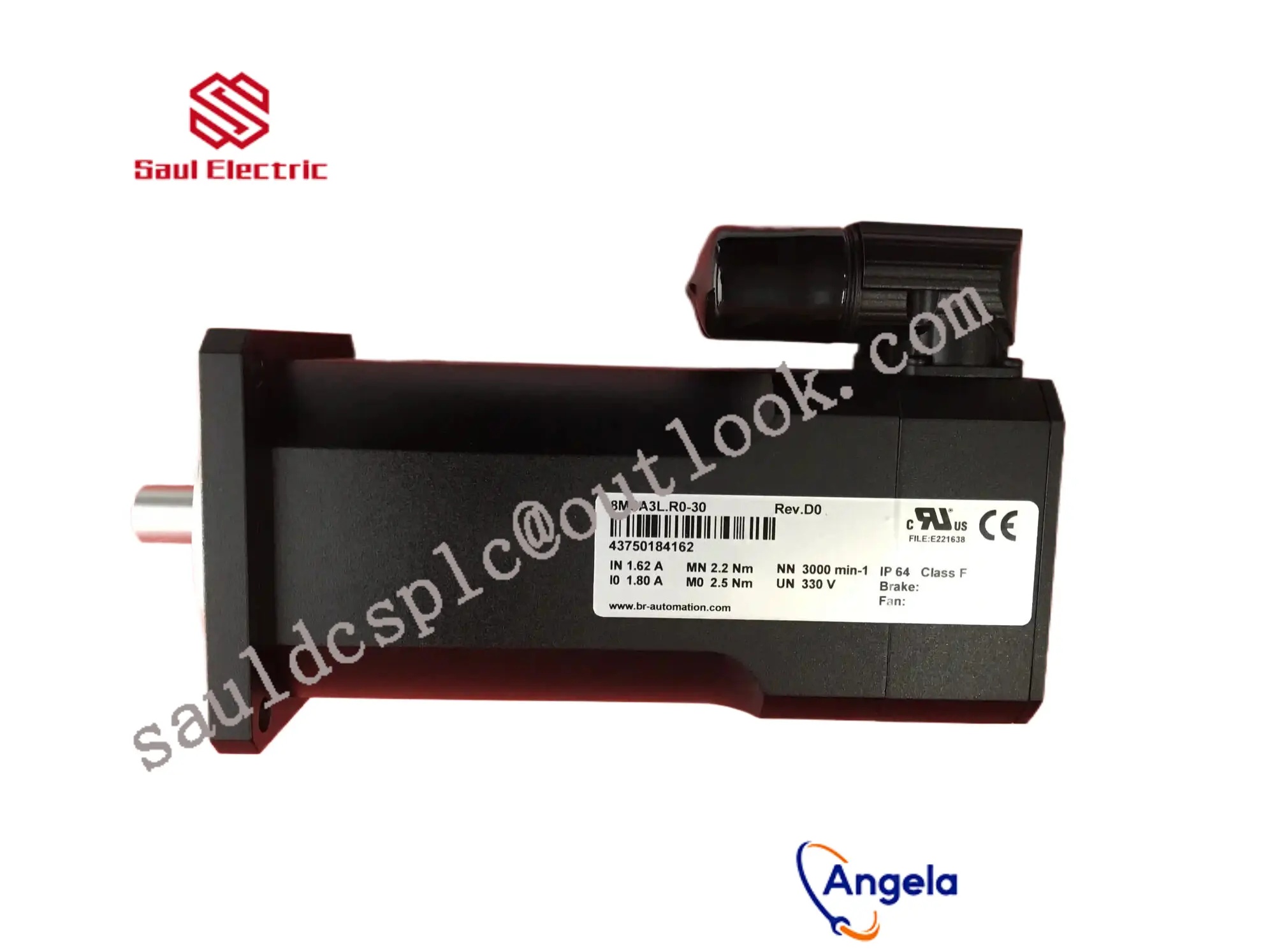
IV. Product Advantages
- Genuine Products: The 8LSA54.E0022D0 00-0 servo motor is manufactured in Austria, ensuring product quality and performance.
- Professional Services: B&R has a professional technical support and after-sales service team capable of providing timely and efficient technical support and solutions to users.
- Customization Options: B&R offers customized servo motor solutions to meet the specific needs of different users.
The ordinary motors, stepper motors, deceleration motors, and servo motors mentioned here refer to micro motors powered by direct current,
and the ones we usually come into contact with are mostly direct current. The knowledge of motors is profound, and this article only briefly
discusses various motors commonly used in making robots. Electric motor, commonly known as “motor”, refers to an electromagnetic device that converts or transfers
electrical energy based on the law of electromagnetic induction. It is represented by the letter “M” (formerly “D”) in circuits. Its main function is to generate driving torque as
a power source for electrical appliances or various machinery.
Ordinary DC motor
Ordinary motors are the ones we usually use, which are included in electric toys, razors, and more. Generally, there are only two pins, and connecting the
positive and negative terminals of the battery to the two pins will cause the motor to rotate. Then, if the positive and negative terminals of the battery are connected in
opposite directions to the two pins, the motor will also rotate in the opposite direction. This type of motor has the characteristics of high speed and low torque, and is
generally not directly used in smart cars. When the DC power supply supplies power to the armature winding through the electric brush, the current flowing in the same
direction can pass through the N-pole lower conductor on the surface of the armature. According to the left-hand rule, the conductor will be subjected to a counterclockwise torque.
The conductor under the S pole on the surface of the armature also flows current in the same direction, and according to the left-hand rule, the conductor will
also be subjected to a counterclockwise torque. In this way, the entire armature winding, i.e. the rotor, will rotate counterclockwise,
and the input DC electrical energy will be converted into mechanical energy output on the rotor shaft. Composed of stator and rotor, stator: base, main magnetic pole,
reversing pole, electric brush device, etc; Rotor (armature): armature core, armature winding, commutator, shaft, fan, etc. A DC motor is an electric motor that converts DC
electrical energy into mechanical energy. Due to its excellent speed regulation performance, it has been widely used in electric drive. DC motors are divided into three categories
based on excitation methods: permanent magnet, separate excitation, and self excitation. Among them, self excitation is further divided into parallel excitation, series excitation, and compound excitation.
gear motor
A deceleration motor is a combination of an ordinary motor and a gearbox, which reduces the speed and increases the torque, making the ordinary motor more widely applicable.
This type of integrated body is usually referred to as a gear motor or gear motor, and is usually assembled and supplied as a complete set by a
professional gearbox manufacturer. Deceleration motors are widely used in industries such as steel and machinery. The advantages of using a deceleration motor are simplified design and space saving.
After World War II, the rapid development of military electronic equipment promoted the development and production of micro reduction motors and DC reduction motors in countries such
as the United States and the Soviet Union. With the continuous development of the deceleration motor industry, more and more industries and enterprises are using deceleration motors,
and a group of enterprises have also entered the deceleration motor industry. Currently, countries such as Germany, France, the United Kingdom, the United States, China,
and South Korea maintain a leading position in the global market for micro reduction motors and DC reduction motors. The Chinese micro reduction motor and DC reduction
motor industry was founded in the 1950s. Starting from meeting the needs of supporting weapons and equipment, it has gone through stages of imitation, self design, research
and development, and large-scale manufacturing. It has formed an industrial system with complete supporting facilities such as product development, large-scale production,
key components, key materials, specialized manufacturing equipment, testing instruments, and continuously improving internationalization.
Deceleration motors are usually used on smart cars, and the control of the motor is usually done using the H-bridge scheme. The L298 chip is based on this principle.
The speed regulation generally adopts PWM (Pulse Width Modulation) mechanism, and the
microcontroller uses a timer to control the generation of PWM waves with variable duty cycle or
directly outputs different sized waveforms through hardware PWM to control the overall speed of the car.