


Description
I. Brand Background
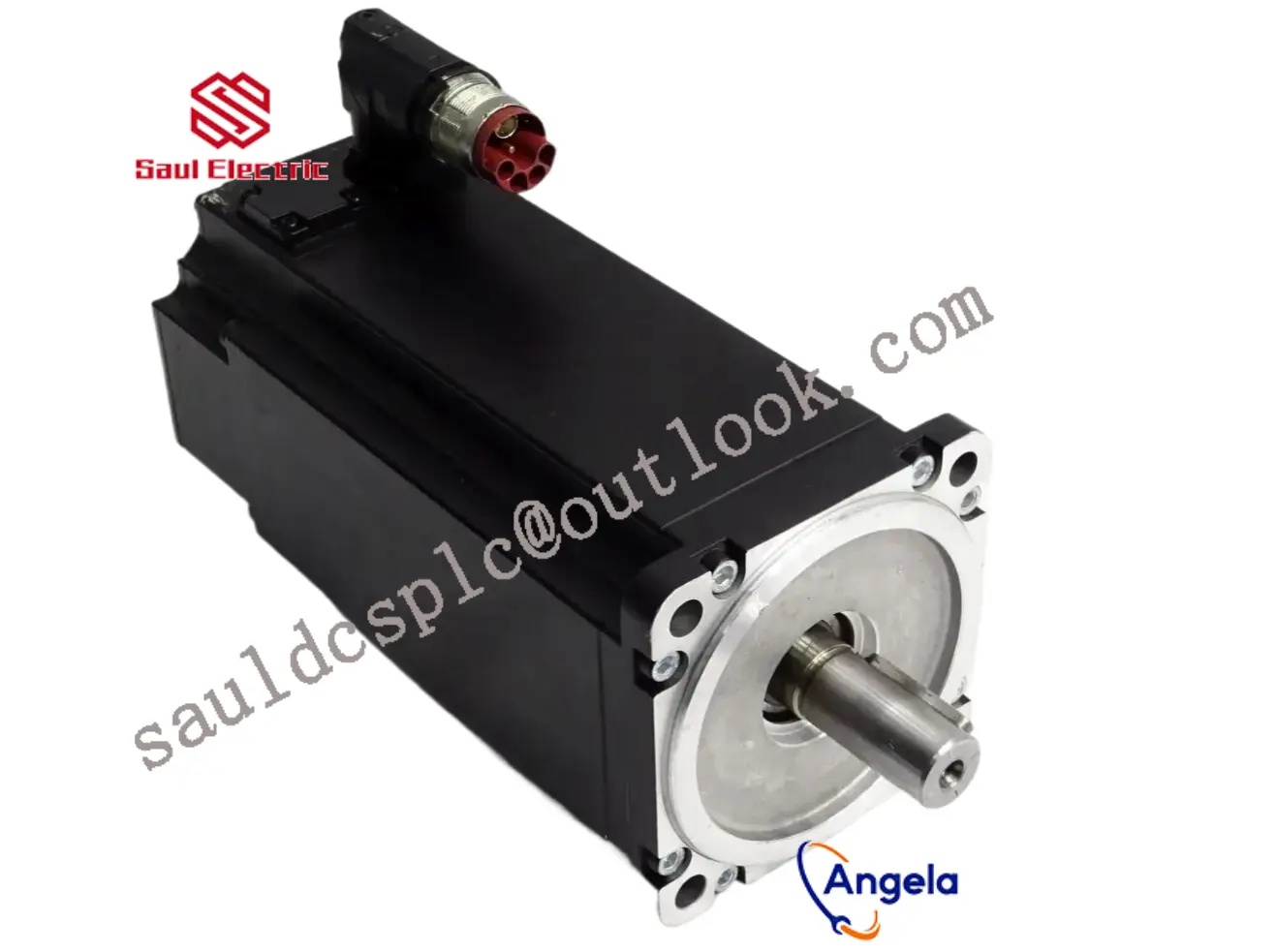
II. Product Features
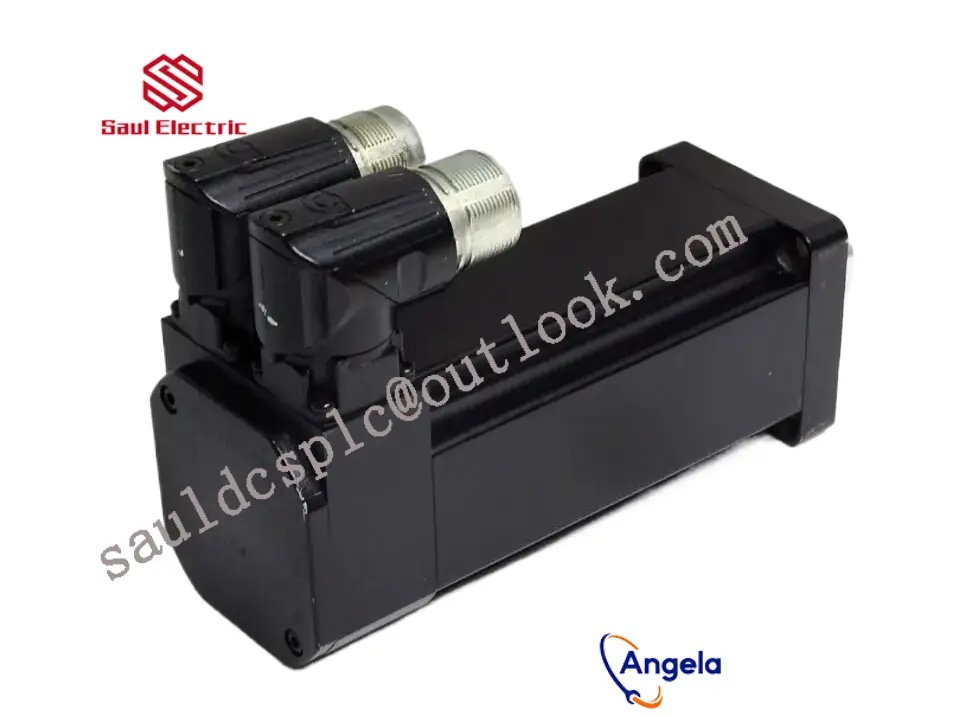
- High Performance: The 8LSA44.S1060D300-3 servo motor offers high precision, rapid response, and excellent stability, meeting the demands of various complex automation applications.
- Integrated Safety Technology: B&R”s servo motors incorporate advanced safety technologies, such as the openSAFETY standard,
- ensuring the safety of operators while supporting machine functionality. This safety technology adapts to changing configurations and operates reliably worldwide.
- Easy Management: With intelligent safety response capabilities, the 8LSA44.S1060D300-3 servo motor simplifies machine option management without compromising safety levels.
- This helps reduce downtime risks and enhance production efficiency.
- Networked Collaboration: B&R”s integrated, networked safety technology enables coordinated responses to safety events across the entire production line.
- The use of safety standards like openSAFETY ensures secure communication and interoperability between devices from different manufacturers.
- Powerful Software Support: B&R”s Automation Studio software development platform provides robust support for configuring, commissioning,
- and maintaining servo motors. Users can easily accomplish various automation tasks through this platform.
III. Application Areas
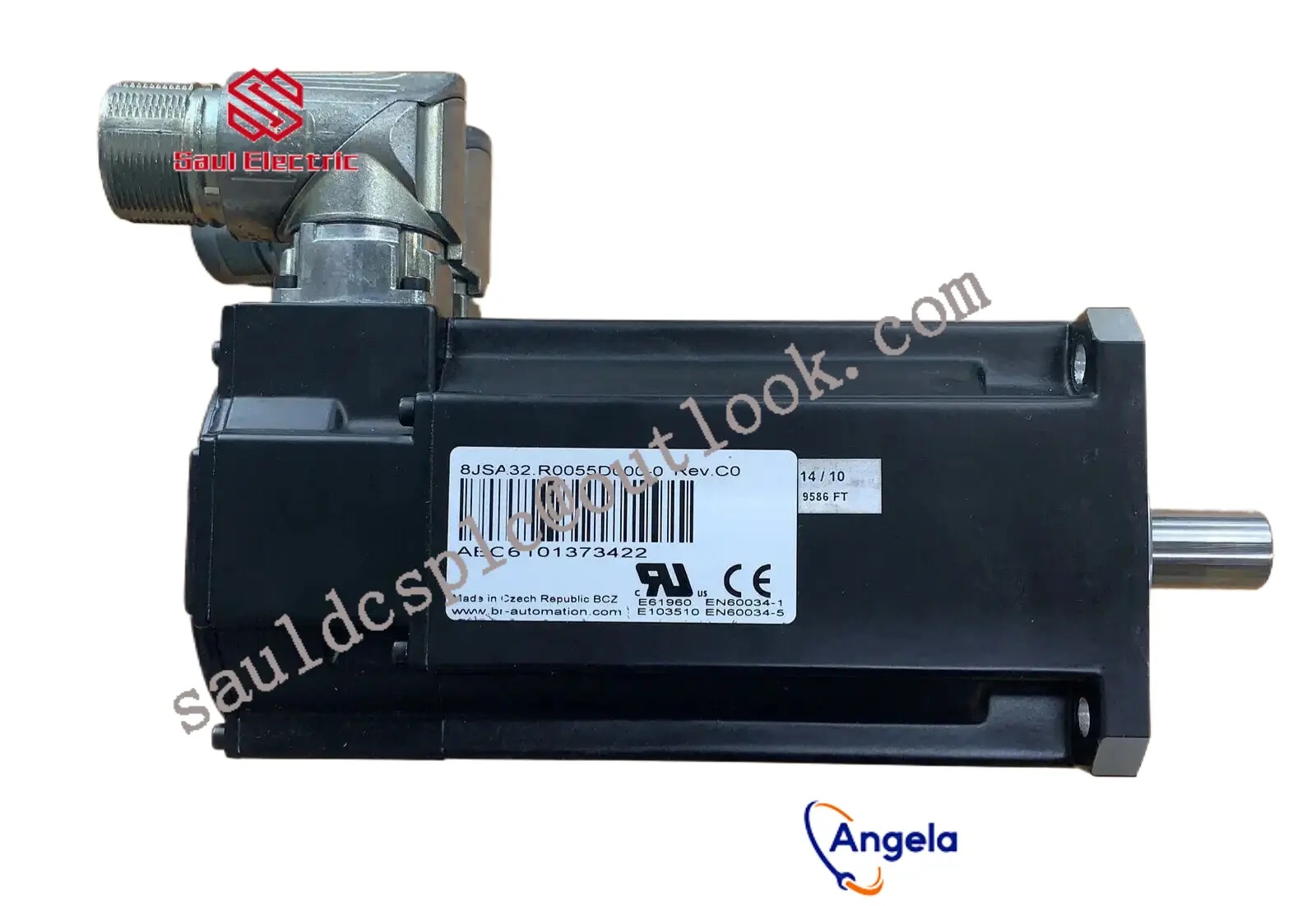
IV. Product Advantages
- Genuine Products: The 8LSA44.S1060D300-3 servo motor is manufactured in Austria, ensuring product quality and performance.
- Professional Services: B&R has a professional technical support and after-sales service team capable of providing timely and efficient technical support and solutions to users.
- Customization Options: B&R offers customized servo motor solutions to meet the specific needs of different users.
There are many applications of servo motors. Do you want to know where servo motors will be used? Let”s talk about the function of the motor in principle.
Servo motor, a rather difficult word to pronounce: servo comes from the English word servo. The commonality between Chinese and English lies in the fact that “server” means” service,
companionship “, which is somewhat similar to” serving “in Chinese.
What does servo motor mean for those who have just entered industrial automation or have just come into contact with machinery?
In fact, a very simple understanding is that this motor can be accurately calculated for how many angles it rotates and can achieve real-time position feedback.
Does it feel like the motor is being monitored in real-time by something? The encoder is responsible for monitoring the motor.
So the characteristics of servo motors are very distinct, and the characteristics of servo motors determine which devices they will be used on.
1. High precision. High precision allows for position control.
2. Closed loop control responds quickly. Fast response enables control over changes in frequency and intensity.
3. If the entire movement of the motor is controlled, the entire motor can be programmed and controlled through digital signals or pulse signals. That is to say, complex movements.
Do you still not understand this feeling? Let”s talk about it below and you”ll understand. We will translate the above three characteristics into various actions in industrial sites.
1. Feature 1: Position control.
Since we can achieve precise alignment, can we do tasks such as labeling, aligning and fitting two products, and creating a promotional platform. Is it possible to
simultaneously control multiple products to form a regular movement, such as the light ball on the stage. Can we achieve high precision in both horizontal and vertical sewing on a printing machine, and then perform sawing.
So when we encounter any device that needs to be very precise, the first thing we need to think of is using a servo. As for whether to use servo motors or stepper motors
in the final product design, it depends on the requirements for cost-effectiveness and accuracy.
The accuracy of servo motors is much higher than that of stepper motors. A servo motor with a 17 bit encoder can achieve 600 times the accuracy of a regular stepper motor.
Among the devices that mainly embody the servo position mode, there are:
Quilting and embroidery machines, printing machines, dispensing machines, laminating machines, labeling machines, laminating machines, detection and conveying
platforms in the field of electronic manufacturing, various types of conveyor lines, displacement machines, and various types of flying shears and chasing shears.
The servo motor used on the hottest mask machine in 2020 is a 750W servo, controlled by PLC or motion controller, mainly for tension control in dragging the
mask raw material strip (you can simply understand it as an advanced version of position control mode).
For many friends who are just starting out in this industry, if you want to see if a device needs to use a servo, you can ask the other party if the machining accuracy
of this thing needs to be very high. If it doesn”t need to be very high, then basically a stepper motor may suffice.
2. Feature 2: Closed loop control related applications.
In fact, with the fast response of closed-loop control, we can first think of the application of various valves and switches, right?
Congratulations, you did answer correctly.
Take our hottest ventilator as an example, it uses servo valves to mix air and oxygen.
In terms of corresponding speed, the first application field we found is various machine tools. As long as you see that machine tools that frequently change speed or position are basically powered by servo motors.
For example, all axes of a 5-axis machine tool are servo driven, and several of them mainly provide position control. The second largest application market is the industrial robot market.
An industrial robot uses 6 servo motors, which have very high precision control and high responsiveness to the servo motors.
In equipment that can quickly respond to applications such as CNC machine tools for turning, milling, planing, grinding, servo turret punching, bending machines, laser cutting machines,
and so on. Various industrial robots, collaborative robots, and AGV cars also use servo motors.
3. Feature 3: Precise control over continuous motion.
This feature is mainly a sublimation version of the first two features. For example, a servo press, a 2000 ton servo press, can achieve a pressure of 20000N · m and can be controlled in real-time, which is what servo can control.
For example, wire cutting equipment is extremely common in markets such as stone and polycrystalline silicon. This is a typical representative of achieving precise control in continuous reciprocating motion.
If it is necessary to explain the application scenarios of servo motors in layman”s terms: controlling the output force (professionally known as torque) can be large or small, while achieving
a uniform increase and decrease in force variation. That is to say, not only can the final outcome be controlled, but also every aspect of the process can be controlled.
Below is the selection of servo motors:
Many people mention the constant speed and constant power of servo motors when it comes to their applications in various fields.
In fact, the constant speed and power of the servo are parameters that are only considered when selecting.
Tell me something quite clever. If you plan to design a device, you already have information about the production frequency of the device and the parameters of other electrical equipment.
So if you don”t know about servo motors, just look for a servo motor manufacturer. Let them make the appropriate selection for you directly. You don”t need to put in effort to calculate.
If you really want to calculate how to select servo motors yourself, then you need to have a basic understanding of how much torque is needed.
In general, during the design process of equipment, it is important to have a rough understanding of the required torque. After all, the amount of force needed to process
the equipment can be calculated based on experience. (You can”t figure it out, you”re just a blank sheet of paper, slowly learning).
Actually, it should consider torque, motor power, and torque calculation formulas.
That is, T=9550P/n
Where:
P represents power, kW; n represents the rated speed of the motor, r/min; T torque, Nm。
The output torque of a servo motor must be greater than the torque required by the working machinery, usually requiring a safety factor.
Mechanical power formula: P=T * N/97500
P: Power unit W; T: torque, unit g/cm; N: speed, unit r/min.
How is servo selection made in reality?
In practical operation, you should consult the manufacturer of the servo based on the parameters of the equipment. The sales engineer of the manufacturer will
determine which motor is more suitable based on its speed and torque. Then take it to the site for testing, adjust the parameters according to the actual usage situation,
and see if this servo motor is suitable for this. For example, if the inertia is too large in this area, it is necessary to replace it with a servo with a small inertia. For example,
in the use of this place, it was found during on-site evaluation that it is necessary to have brake pads, oil seals, and so on. The selection of servo is basically not done in one step.