


Description
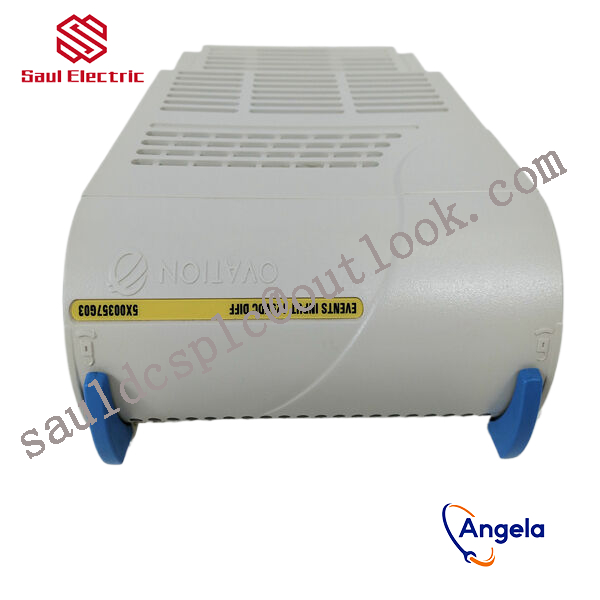
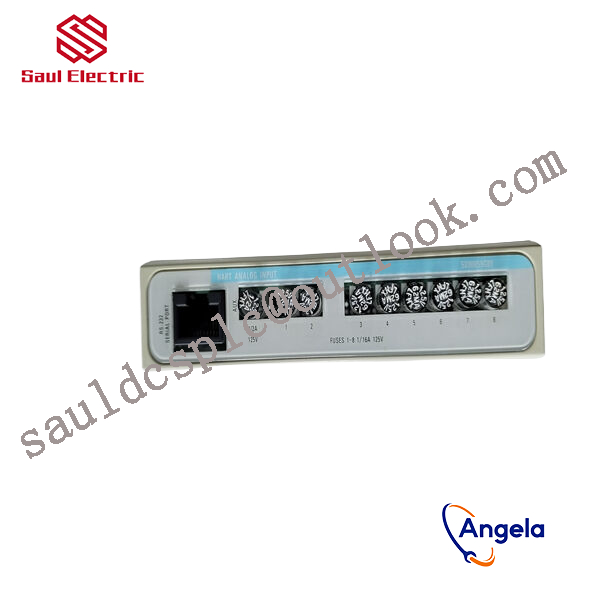
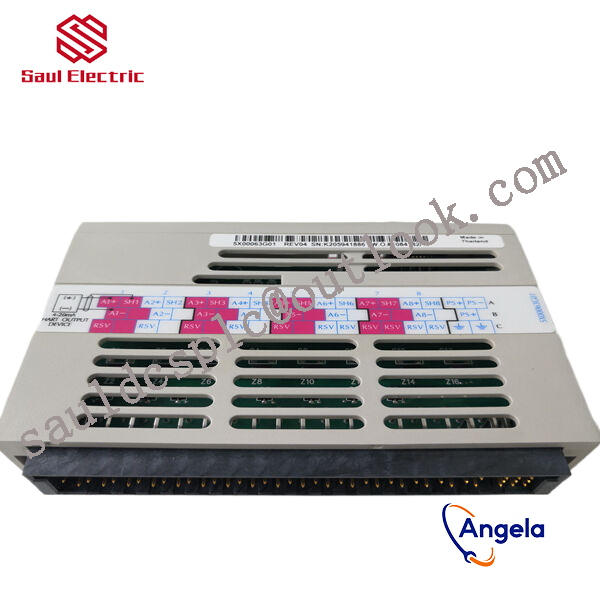
5X00502G01 Emerson Ovation HART Analog Output Module
thereby controlling external devices or circuits.
Half bridge driver:
The working principle of a half bridge driver is based on the alternating conduction and cutoff of two power switches. By adjusting the control signal, the upper and lower bridge arms alternately open and close, thereby controlling the current flow and magnitude of the load.
In practical applications, the frequency and duty cycle of the control signal can be adjusted to achieve precise control of the load. For example, in motor control, the speed and direction of the motor can be controlled by adjusting the duty cycle of the PWM signal.
Full bridge driver:
The working principle of the full bridge driver is also based on the alternating conduction and cutoff of power switches, but due to its four switching elements, it can achieve more complex control strategies.
In motor control, the full bridge driver can achieve forward and reverse rotation and speed regulation of the motor by controlling the switching status of the upper and lower bridge arms. Specifically, when the motor needs to rotate forward, a certain switch on the upper bridge arm is turned on, and the corresponding switch on the lower bridge arm is also turned on; When the motor needs to be reversed, switch the switch state of the upper and lower bridge arms. At the same time, the motor speed can be adjusted by changing the conduction time of the left and right bridge arms.
3、 Performance characteristics
Half bridge driver:
Simple structure: Due to only containing two power switching elements, the structure is relatively simple and the cost is low.
Flexible control: Although only half of the motor winding can be controlled, the other half of the winding can be controlled through external circuit coordination.
Low power utilization: Due to the fact that only forward or reverse current can be used for operation, the power utilization is relatively low.
Low power loss: Due to the small number of switching elements, the power loss is relatively low.
Full bridge driver:
Strong control flexibility: It can achieve bidirectional control by controlling the magnitude and direction of forward and reverse currents to control the direction and speed of the motor.
High power utilization: It can work with both forward and reverse currents simultaneously, achieving maximum power utilization.
Large torque and speed range: Due to the ability to provide larger currents and more complex control strategies, it is suitable for applications that require high efficiency and large currents.
High cost: Due to the complex structure and the need for more components and control circuits, the cost is relatively high
responsible for processing signals from on-site sensors or driving actuator actions. For example, they may need to cooperate with devices such
as BANNER travel switch T30UIPB to receive their transmitted position signals; Or by controlling components such as Burkert solenoid valve 00131421, the on/off of fluid media can be precisely managed.
these modules integrate more complex logic processing capabilities. The core task of a pressure switch is to detect whether the pressure
has reached a preset threshold and output a switch signal. Its function is highly specific and fixed. And modules 5X00502G01 and 1
C31219G01 have the ability to comprehensively judge multiple such switch signals and transmitter signals (such as transmitter 1066-P-HT-60),
and output complex control instructions according to internal logic.