


Description
I. Brand Background
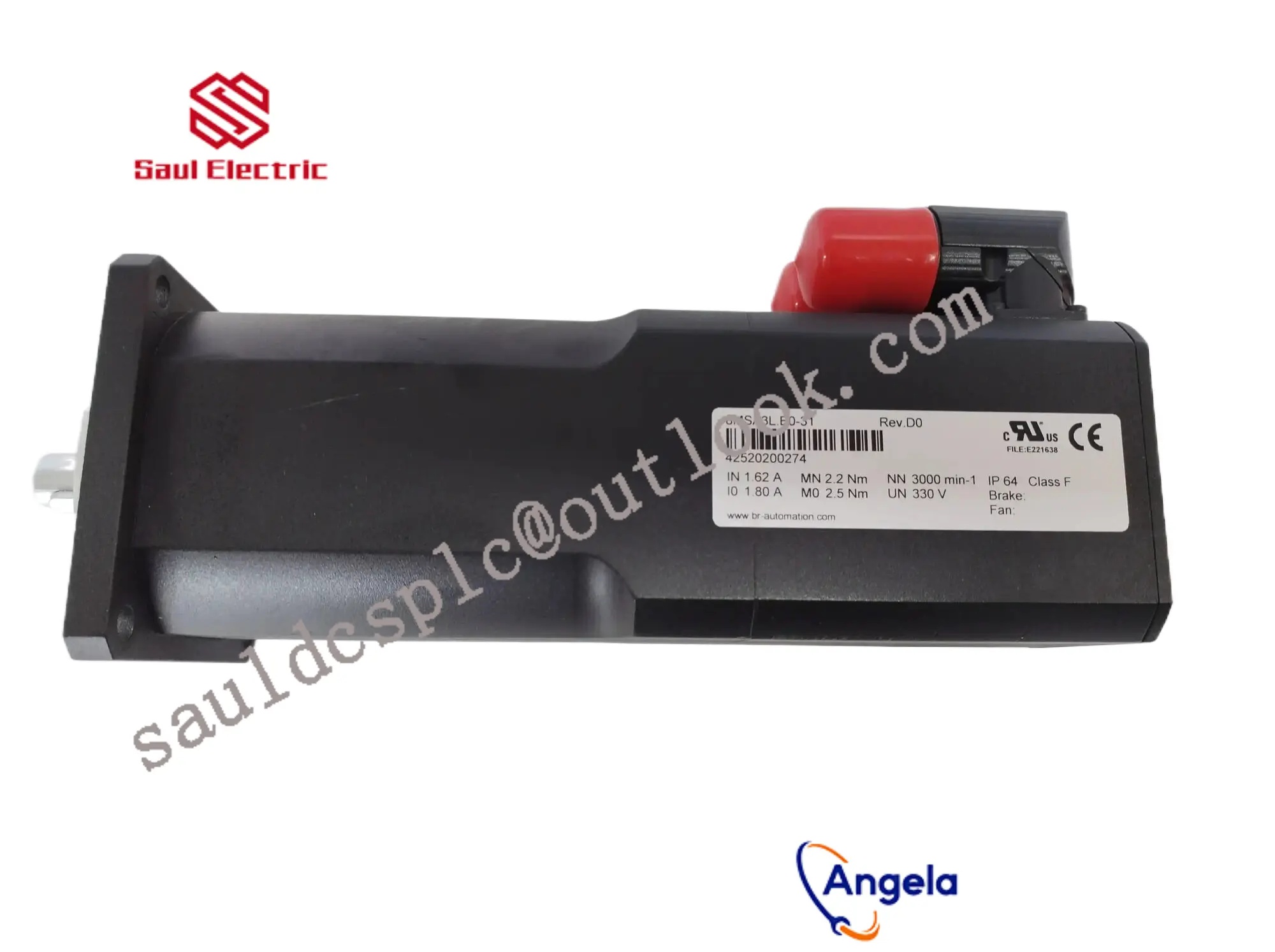
II. Product Features
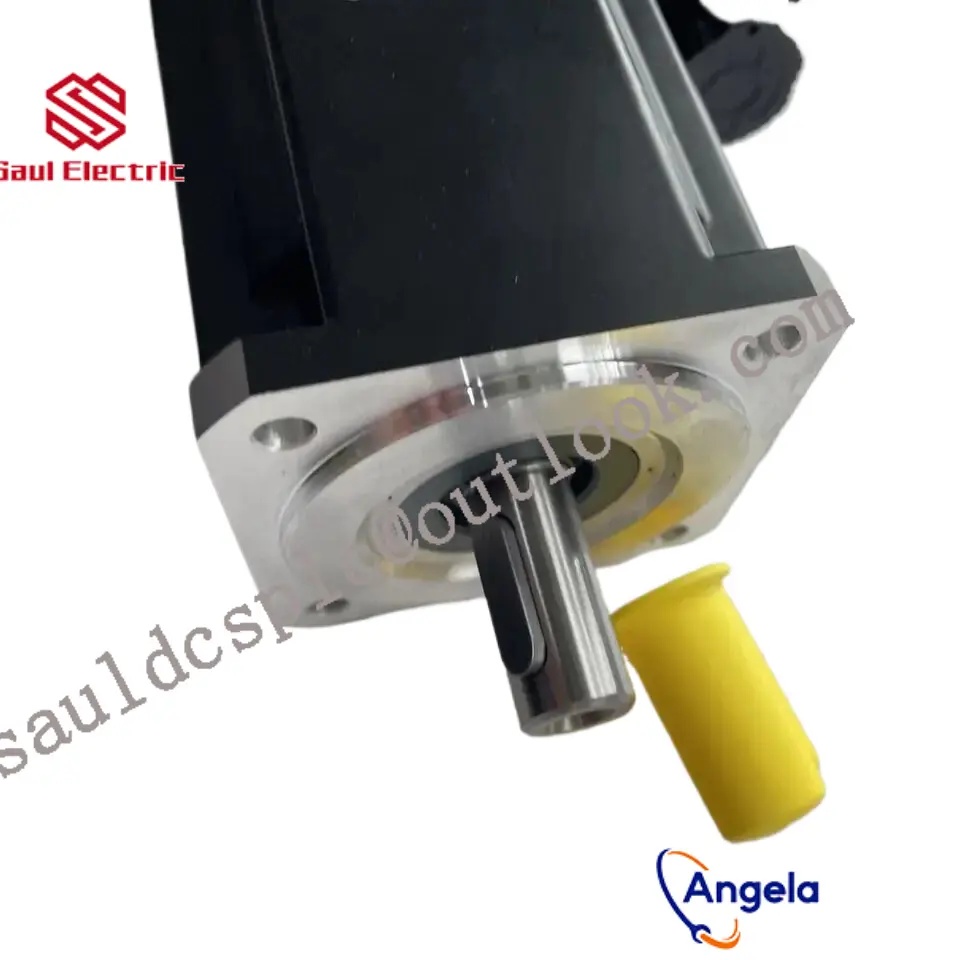
- High Performance: The 8MSA4M.E3-67 servo motor offers high precision, rapid response, and excellent stability, meeting the demands of various complex automation applications.
- Integrated Safety Technology: B&R”s servo motors incorporate advanced safety technologies, such as the openSAFETY standard,
- ensuring the safety of operators while supporting machine functionality. This safety technology adapts to changing configurations and operates reliably worldwide.
- Easy Management: With intelligent safety response capabilities, the 8MSA4M.E3-67 servo motor simplifies machine option management without compromising safety levels.
- This helps reduce downtime risks and enhance production efficiency.
- Networked Collaboration: B&R”s integrated, networked safety technology enables coordinated responses to safety events across the entire production line.
- The use of safety standards like openSAFETY ensures secure communication and interoperability between devices from different manufacturers.
- Powerful Software Support: B&R”s Automation Studio software development platform provides robust support for configuring, commissioning,
- and maintaining servo motors. Users can easily accomplish various automation tasks through this platform.
III. Application Areas
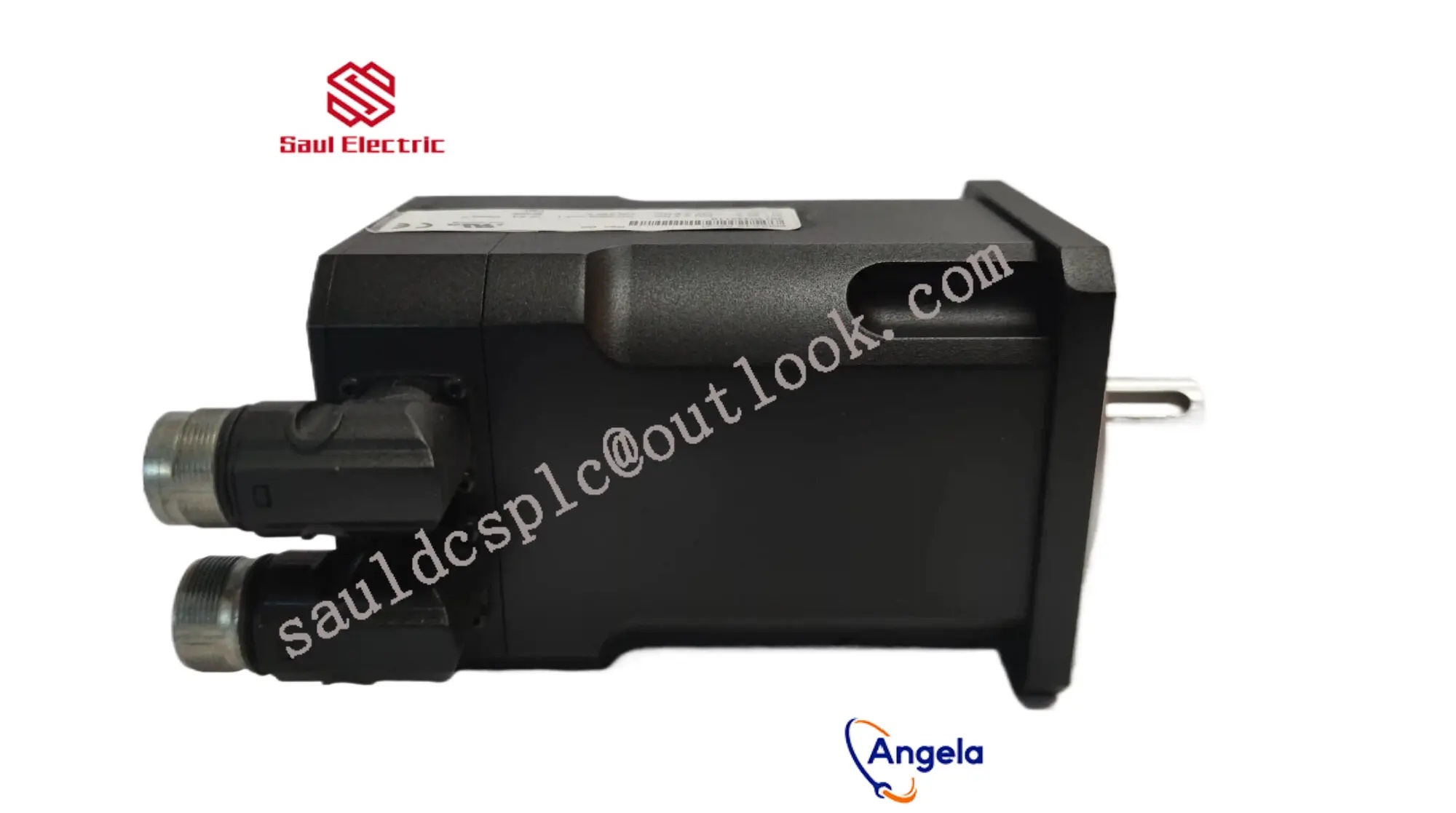
IV. Product Advantages
- Genuine Products: The 8MSA4M.E3-67 servo motor is manufactured in Austria, ensuring product quality and performance.
- Professional Services: B&R has a professional technical support and after-sales service team capable of providing timely and efficient technical support and solutions to users.
- Customization Options: B&R offers customized servo motor solutions to meet the specific needs of different users.
1) The motor rotates with the help of magnets and magnetic forces
Around a permanent magnet with a rotating axis, ① the rotating magnet (generates a rotating magnetic field), ② according to the principle of
opposite polarity attraction and same level repulsion between the N and S poles, ③ the magnet with a rotating axis will rotate.
This is the basic principle of motor rotation.
The current flowing through the wire generates a rotating magnetic field (magnetic force) around it, causing the magnet to rotate, which is actually the same action state.
In addition, by winding the wire into a coil shape, the magnetic force is synthesized to form a large magnetic flux (magnetic flux), producing N and S poles.
Inserting an iron core into a coil shaped wire makes it easier for magnetic lines to pass through, generating stronger magnetic force.
2) Actual rotating motor
Here, as a practical method for rotating motors, we introduce the method of using three-phase AC and coils to manufacture a rotating magnetic field.
(Three phase AC is an AC signal with a phase interval of 120 °)
The synthesized magnetic field in state ① above corresponds to Figure ①.
The synthesized magnetic field in state ② above corresponds to Figure ②.
The synthesized magnetic field in state ③ above corresponds to Figure ③.
As mentioned above, the coils wound around the iron core are divided into three phases, with U-phase coils, V-phase coils,
and W-phase coils arranged at 120 ° intervals. The coils with high voltage produce N poles, while the coils with low voltage produce S poles.
Each phase changes according to a sine wave, so the polarity (N pole, S pole) and magnetic field (magnetic force) generated by each coil will change.
At this point, looking at the coil that produces N poles, it rotates in the order of U phase coil → V phase coil → W phase coil → U phase coil.