


Description
I. Brand Background
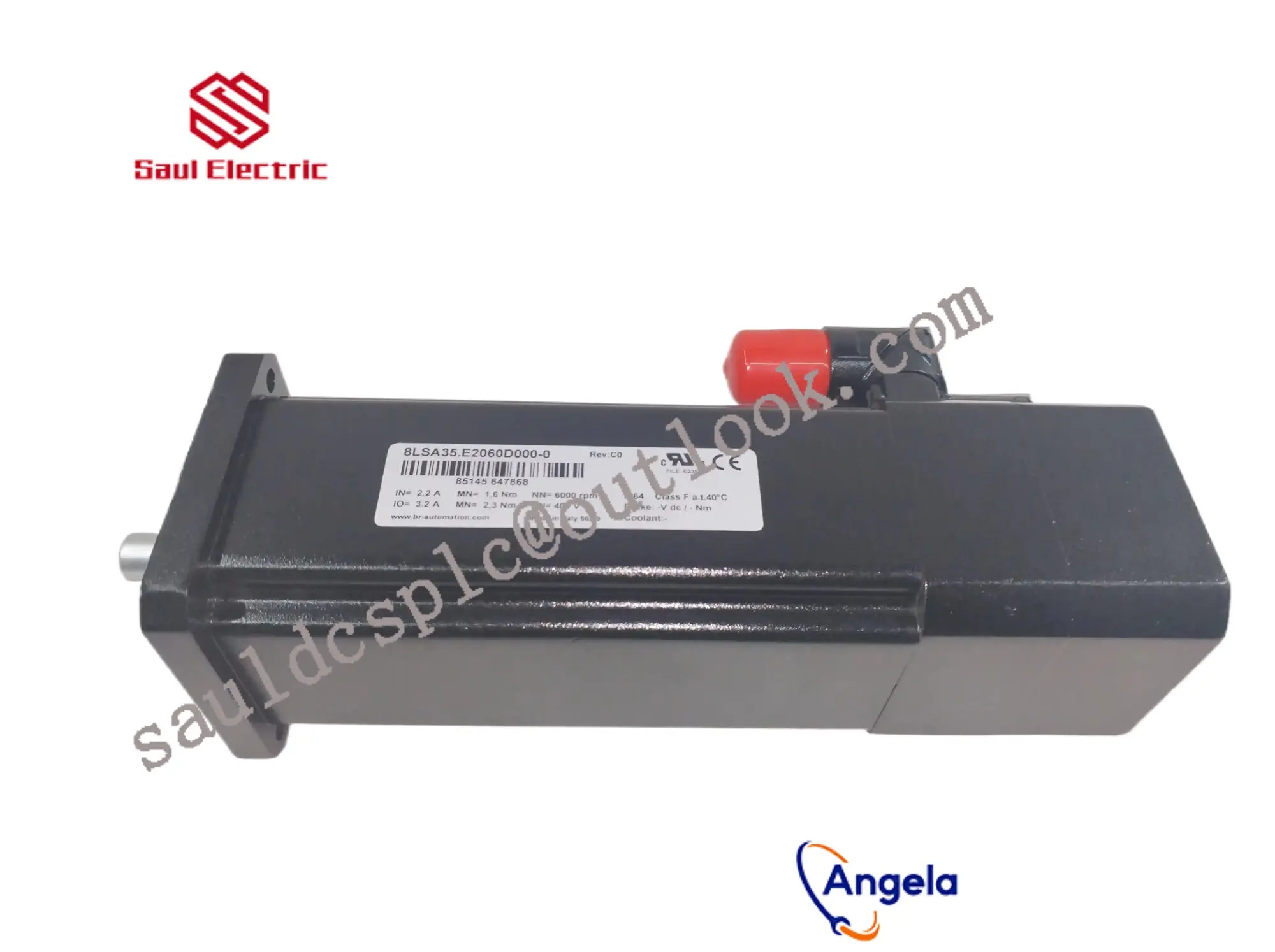
II. Product Features
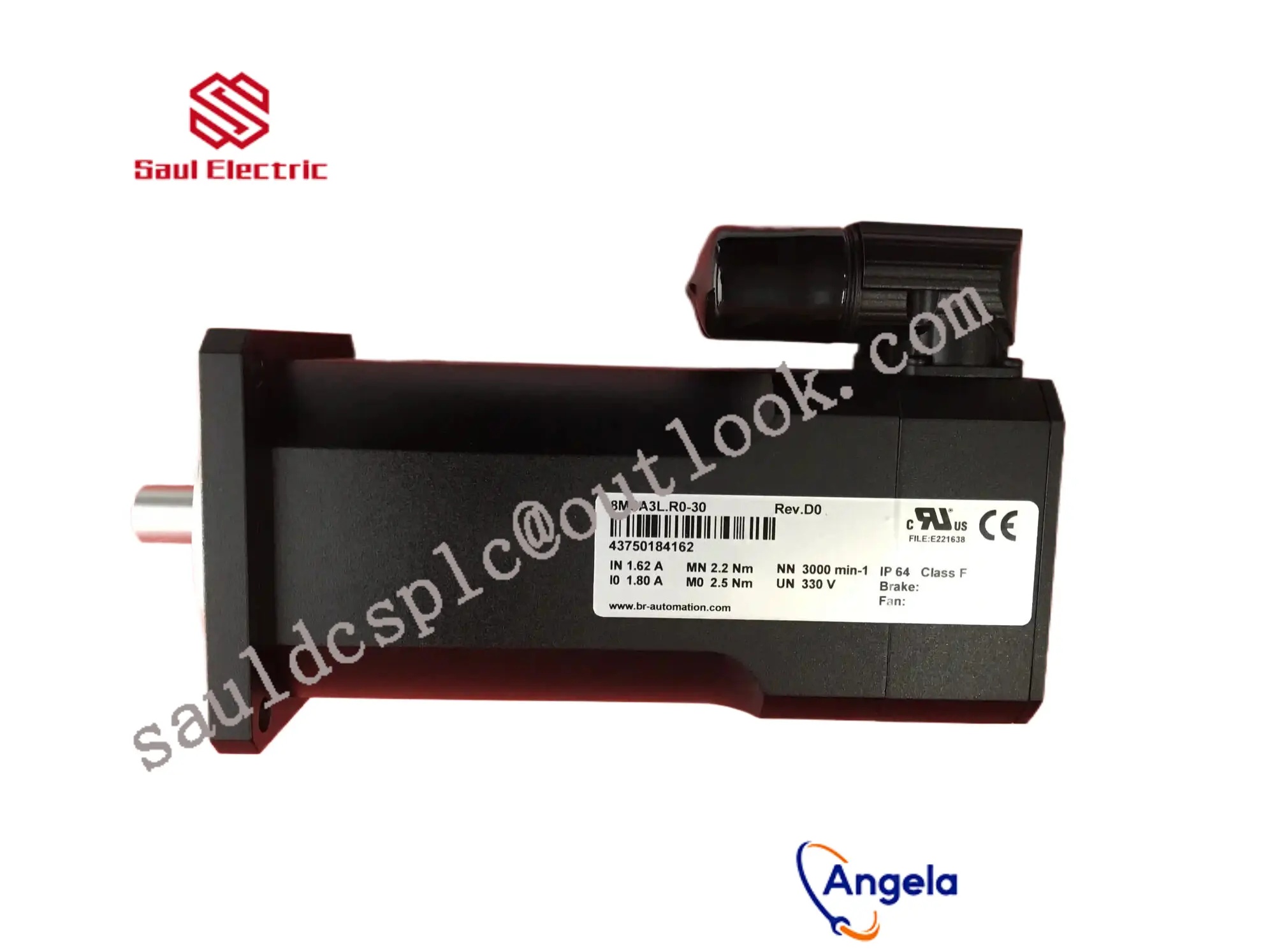
- High Performance: The 8MSA3M.E1-B4 servo motor offers high precision, rapid response, and excellent stability, meeting the demands of various complex automation applications.
- Integrated Safety Technology: B&R”s servo motors incorporate advanced safety technologies, such as the openSAFETY standard,
- ensuring the safety of operators while supporting machine functionality. This safety technology adapts to changing configurations and operates reliably worldwide.
- Easy Management: With intelligent safety response capabilities, the 8MSA3M.E1-B4 servo motor simplifies machine option management without compromising safety levels.
- This helps reduce downtime risks and enhance production efficiency.
- Networked Collaboration: B&R”s integrated, networked safety technology enables coordinated responses to safety events across the entire production line.
- The use of safety standards like openSAFETY ensures secure communication and interoperability between devices from different manufacturers.
- Powerful Software Support: B&R”s Automation Studio software development platform provides robust support for configuring, commissioning,
- and maintaining servo motors. Users can easily accomplish various automation tasks through this platform.
III. Application Areas
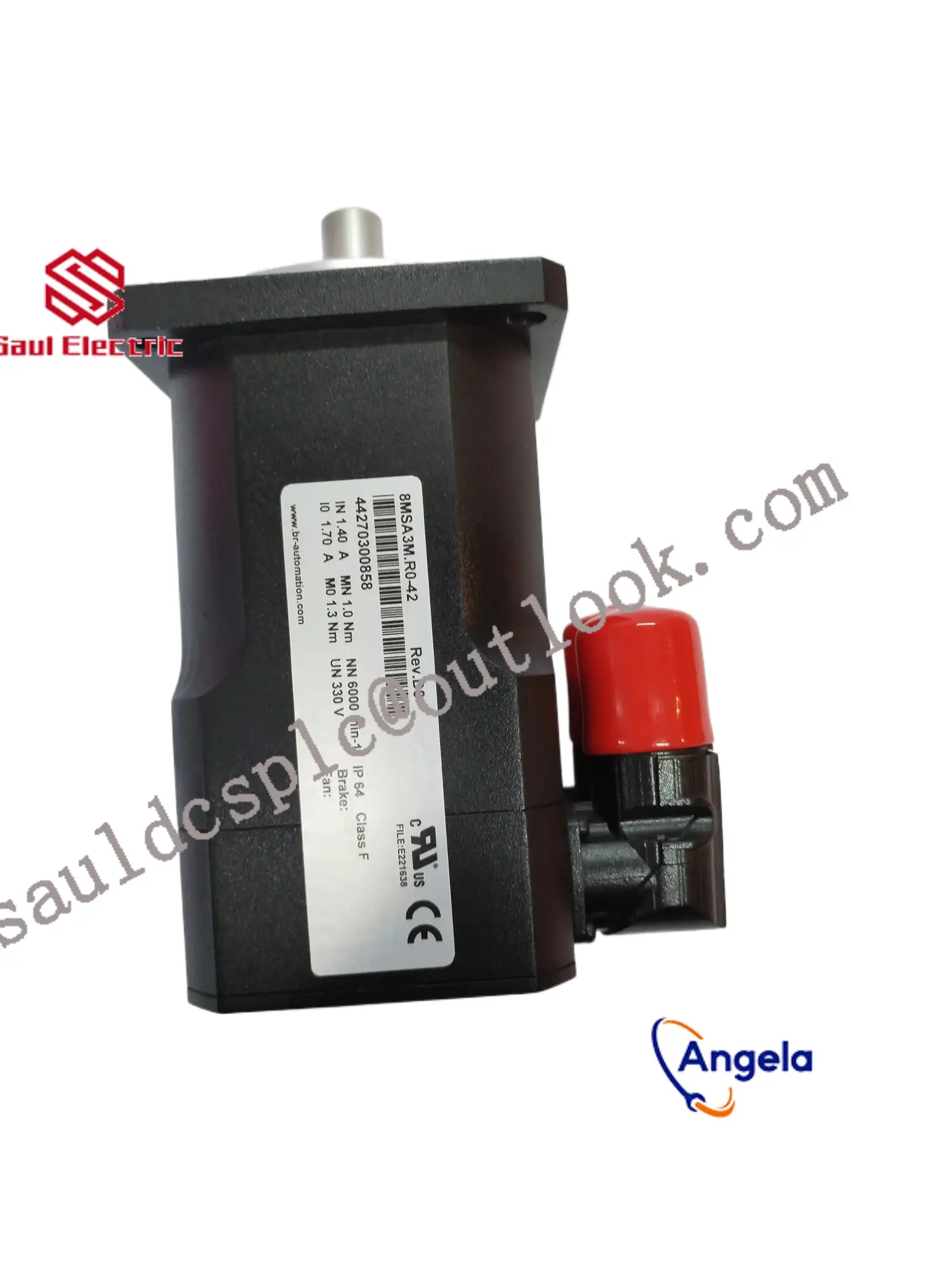
IV. Product Advantages
- Genuine Products: The 8MSA3M.E1-B4 servo motor is manufactured in Austria, ensuring product quality and performance.
- Professional Services: B&R has a professional technical support and after-sales service team capable of providing timely and efficient technical support and solutions to users.
- Customization Options: B&R offers customized servo motor solutions to meet the specific needs of different users.
Brushless motors and servo motors are two different types of motors. Although they are both DC motors, their construction, working principles,
and application fields are different. In this article, we will provide a detailed introduction to the differences between these two types of motors.
1. Construction
The structural differences between brushless motors and traditional brushed motors are significant. There is no traditional carbon brush on the
rotor of a brushless motor. There are fixed electronic components on the rotor, such as Hall elements, sensors, etc. These components can sense
the position of electrode magnetic poles and adjust the current and voltage of the motor to achieve motor control. In servo motors, there are similar
components used to adjust the speed and torque of the motor.
2. Working principle
The rotor of a brushless motor does not have a carbon brush in contact with a fixed magnetic pole height, but drives the rotor through induced
electromotive force to achieve rotation. Therefore, compared to traditional brushed motors, brushless motors can provide greater torque while
maintaining high speed, and their operating efficiency is relatively higher. A servo motor is a type of motor with high-precision speed and position control capabilities.
Servo motors control the position and torque of the motor by reading signals from position
sensors and sending them to specialized circuit boards for processing.
3. Application
Due to its higher operating efficiency, brushless motors are suitable for applications that require efficiency, such as smart homes,
small electric vehicles, toys, drones, and so on. Servo motors are suitable for applications that require higher precision and more accurate
positioning control, such as digital printing, electronic devices, robots, and so on.
4. Control mode
Brushless motors typically use an electric regulator to adjust the current and voltage required for motor operation to achieve the desired speed.
Servo motor control is usually achieved through a controller, which has built-in control algorithms. The controller can read the signals returned
by the position sensor and achieve closed-loop control to control the position and torque of the motor.
5. Summary
Brushless motors and servo motors are both motors designed for precision control. Their accuracy and control methods are the main differences between the two. Brushless motors have superior performance and are suitable for high-efficiency, CNC applications, while also being more affordable. Servo motors are suitable for applications that require high precision control of multiple axes, and are more suitable for high-precision motion systems such as industrial robots, medical equipment, printing machinery, etc. In order to select a suitable motor, relevant factors such as required accuracy, speed, torque, and power need to be considered.