


Description
I. Brand Background
II. Product Features
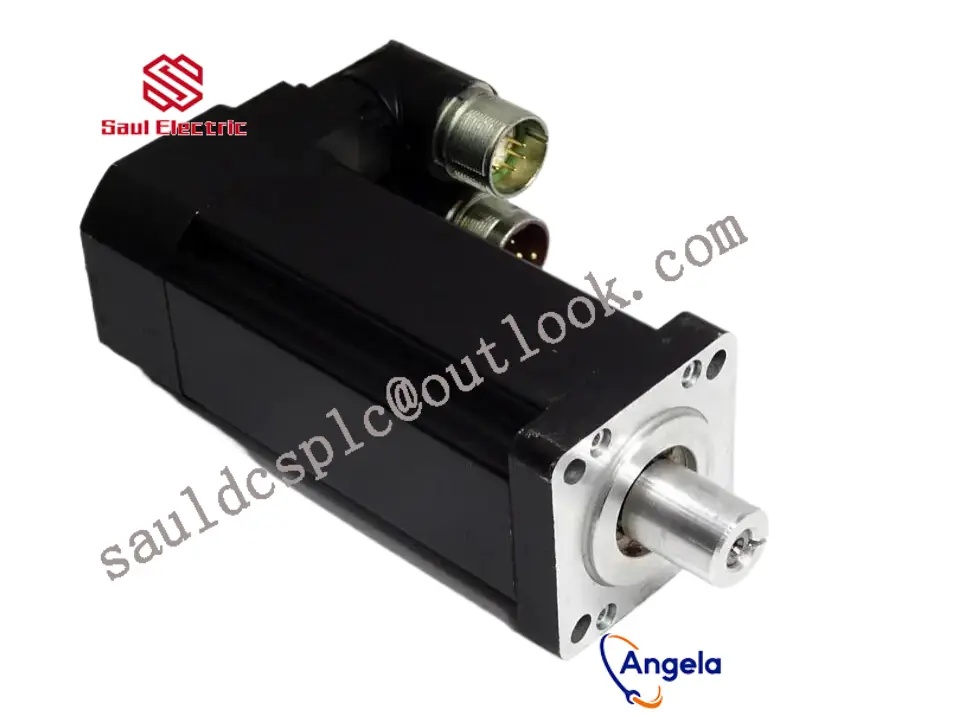
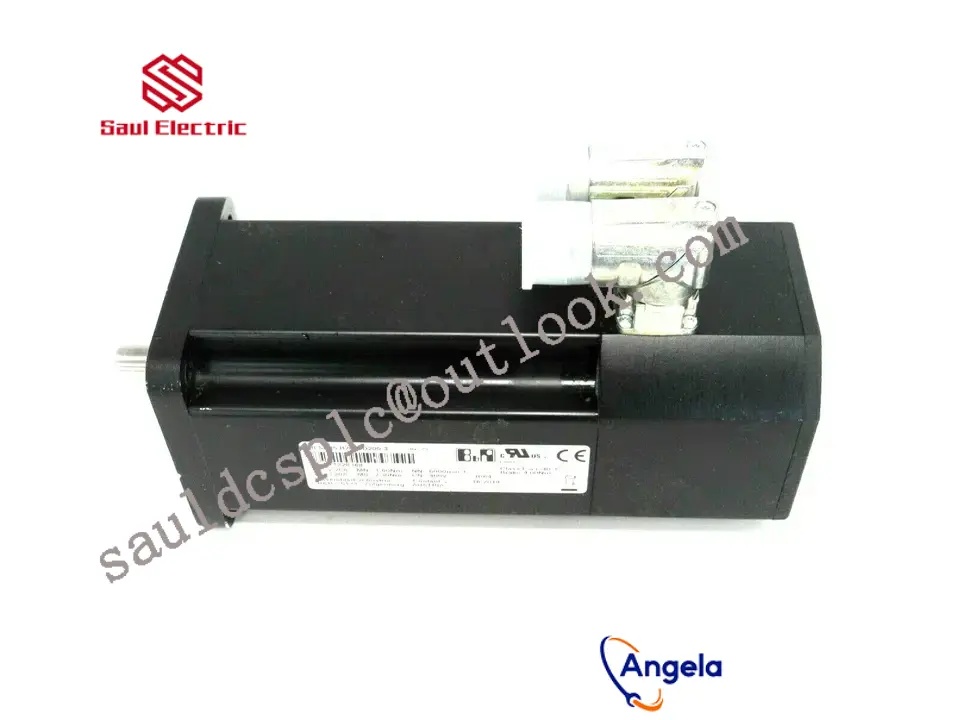
- High Performance: The 8MSA3M-E1-44 servo motor offers high precision, rapid response, and excellent stability, meeting the demands of various complex automation applications.
- Integrated Safety Technology: B&R”s servo motors incorporate advanced safety technologies, such as the openSAFETY standard,
- ensuring the safety of operators while supporting machine functionality. This safety technology adapts to changing configurations and operates reliably worldwide.
- Easy Management: With intelligent safety response capabilities, the 8MSA3M-E1-44 servo motor simplifies machine option management without compromising safety levels.
- This helps reduce downtime risks and enhance production efficiency.
- Networked Collaboration: B&R”s integrated, networked safety technology enables coordinated responses to safety events across the entire production line.
- The use of safety standards like openSAFETY ensures secure communication and interoperability between devices from different manufacturers.
- Powerful Software Support: B&R”s Automation Studio software development platform provides robust support for configuring, commissioning,
- and maintaining servo motors. Users can easily accomplish various automation tasks through this platform.
III. Application Areas
IV. Product Advantages
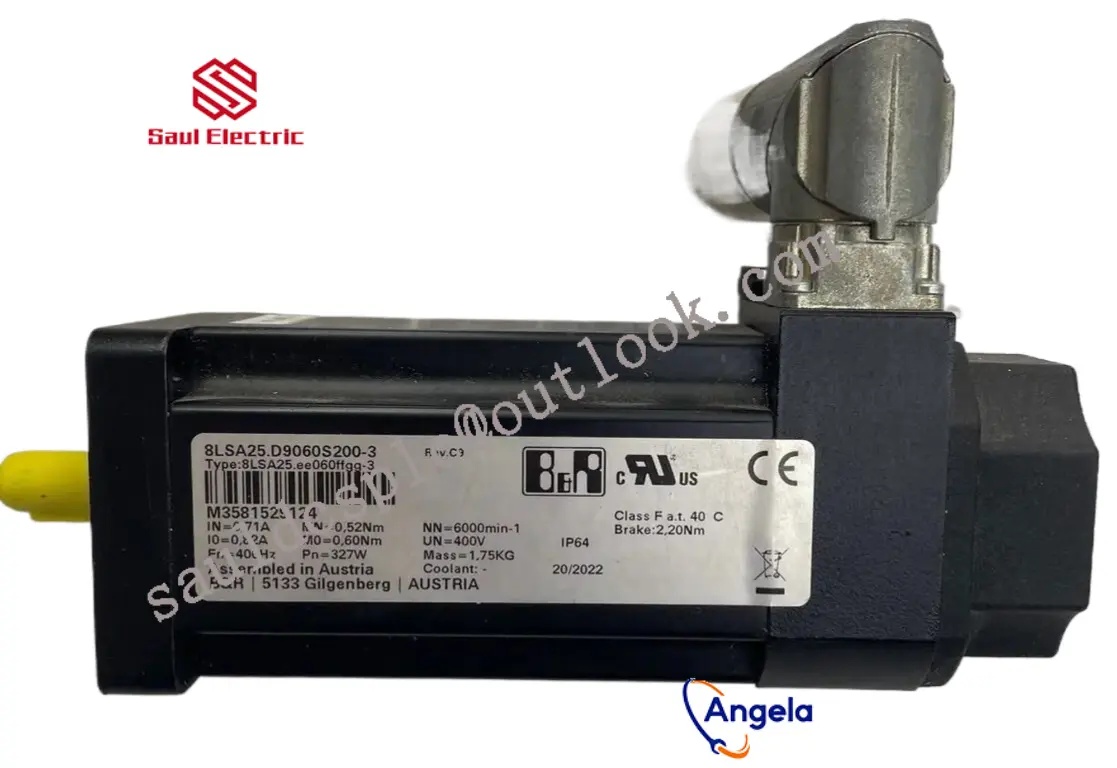
- Genuine Products: The 8MSA3M-E1-44 servo motor is manufactured in Austria, ensuring product quality and performance.
- Professional Services: B&R has a professional technical support and after-sales service team capable of providing timely and efficient technical support and solutions to users.
- Customization Options: B&R offers customized servo motor solutions to meet the specific needs of different users.
In the world of automation control, servo motors and stepper motors are two key roles in achieving precise power transmission. Although their ultimate goal is the same,
which is precise control of mechanical motion, their working principles and optimal application scenarios are different. This article will take you through the key differences between servo motors and stepper motors.
Working principle of motor
Although servo motors and stepper motors are both powerful assistants for controlling mechanical actions, their working principles are different.
Servo motor: Through an external feedback mechanism, precise control of motor speed, position, and other parameters is achieved, using a closed-loop
control system with real-time feedback to maintain accurate position.
Stepper motor: The motor is controlled to rotate by a quantitative pulse signal, with each pulse causing the motor to rotate a fixed step angle.
This is achieved using an open-loop control system, which does not receive position feedback but instead moves according to a given number of steps, with the possibility of losing steps.
WKgZomZv70KAAYbpAUMAAMFYSBg622.png Factory Machine
Key differences in motors
1. Accuracy:
Servo motors can provide more accurate position, speed, and acceleration control. Due to feedback adjustments, very high positional accuracy can be achieved, typically up to a few micrometers.
The output characteristics of stepper motors are relatively simple, usually rotating at a fixed step pitch. The accuracy is high
under no-load or light load conditions, but step loss may occur when the load is large or the speed changes, resulting in a decrease in accuracy.
2. Power:
Servo motors can maintain stable torque within a wide speed range. It can run at high speed and has stronger adaptability. Servo motors typically provide greater power in smaller volumes.
Stepper motors have strong torque at low speeds, but the torque decreases with increasing speed. Usually operates in the low-speed range. The power density of stepper motors is relatively low.
3. Application scenarios:
Servo motors are widely used in applications that require high-performance control, such as CNC machine tools, robots, etc.
Stepper motors are commonly used in devices such as printers and scanners that do not require feedback systems.
Motor cost
1. Servo motor
High price, but superior performance, suitable for high-end applications. Servo motors have higher energy efficiency and may save energy in long-term
operation, but their maintenance and replacement component costs are often higher than stepper motors.
2. Stepper motor
Simple structure, low cost, suitable for applications with limited budget. Due to its high pole count and ability to generate holding torque at zero speed, stepper motors consume less electrical energy in static state.