


Description
I. Brand Background
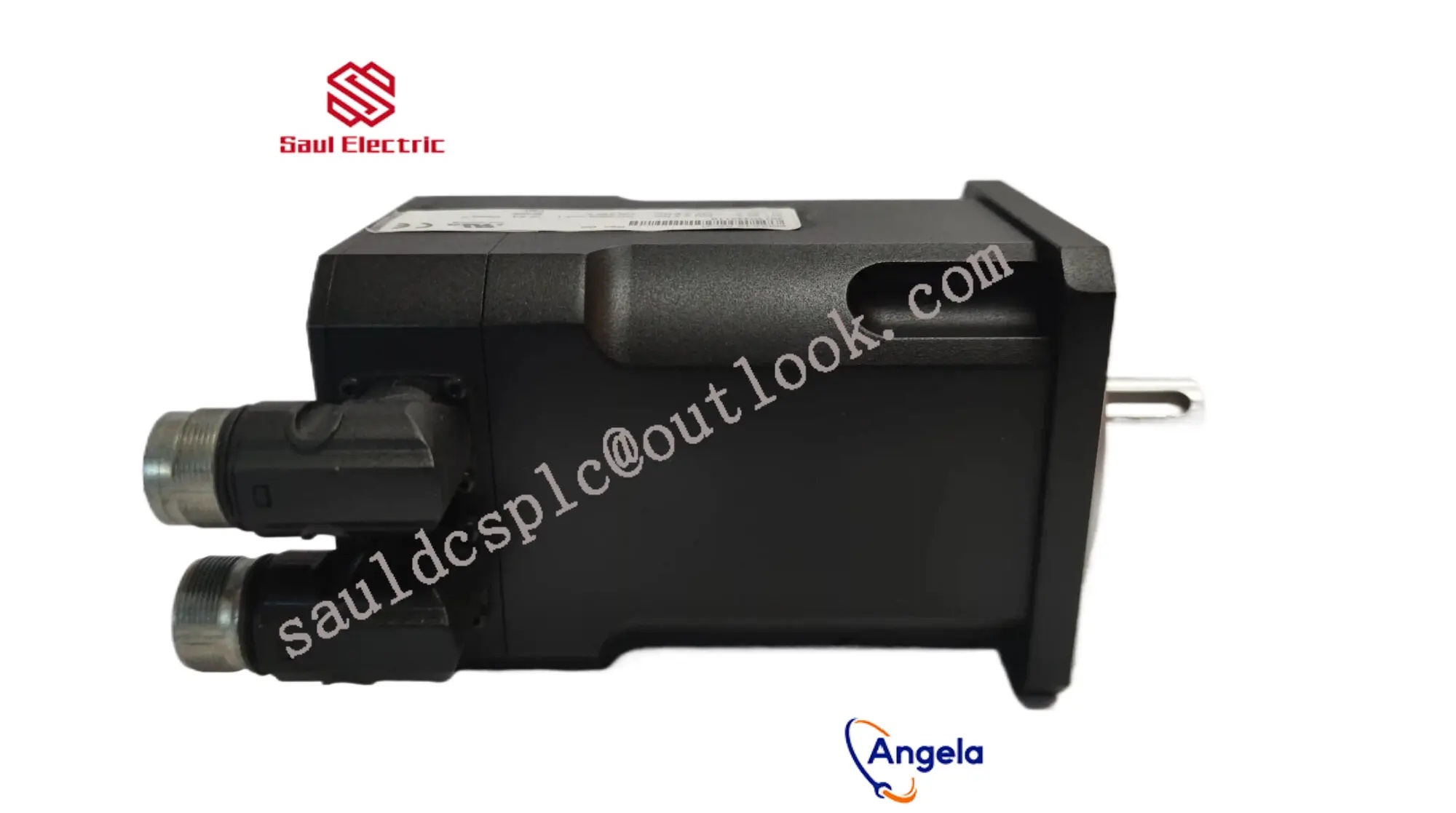
II. Product Features
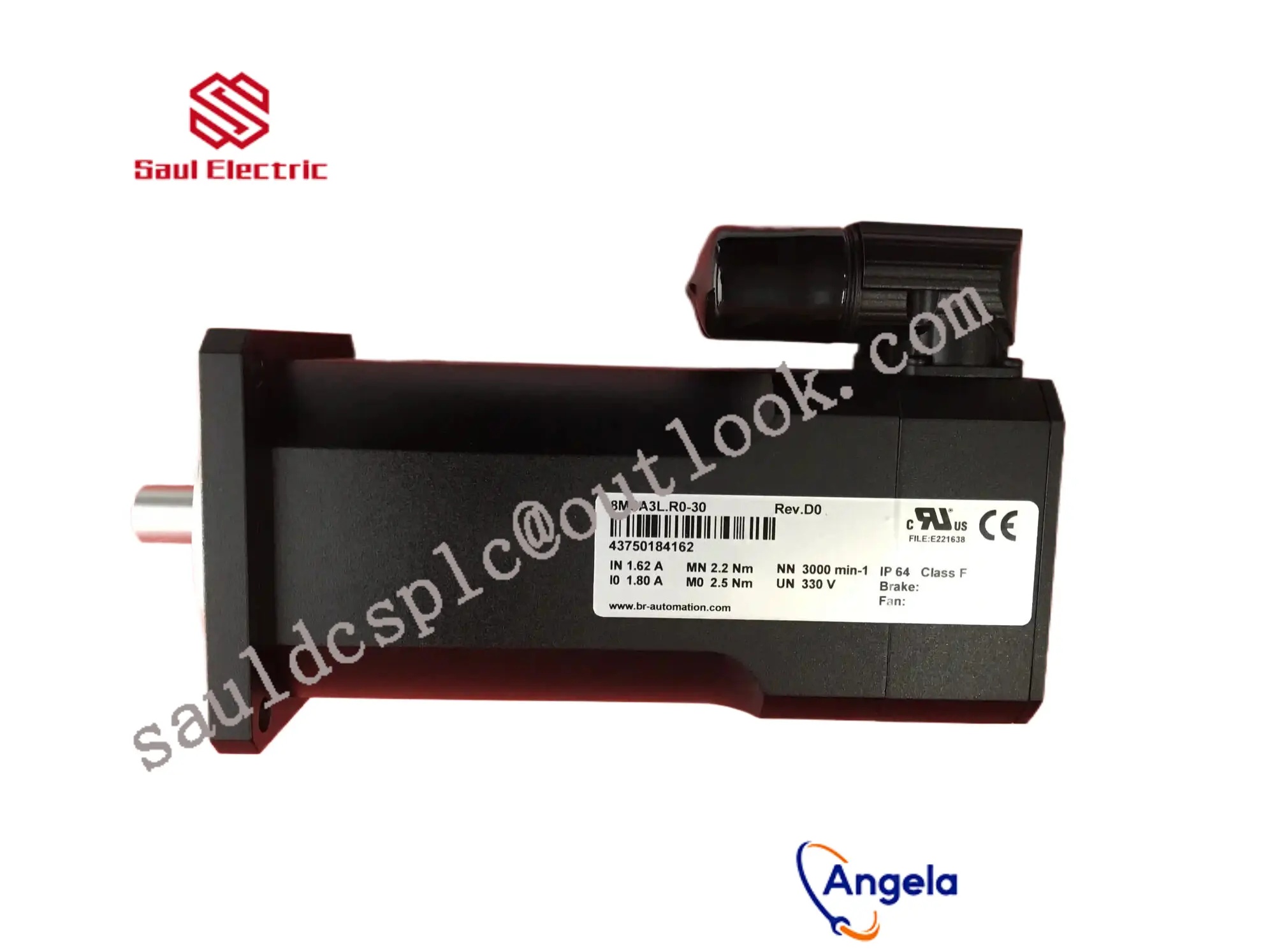
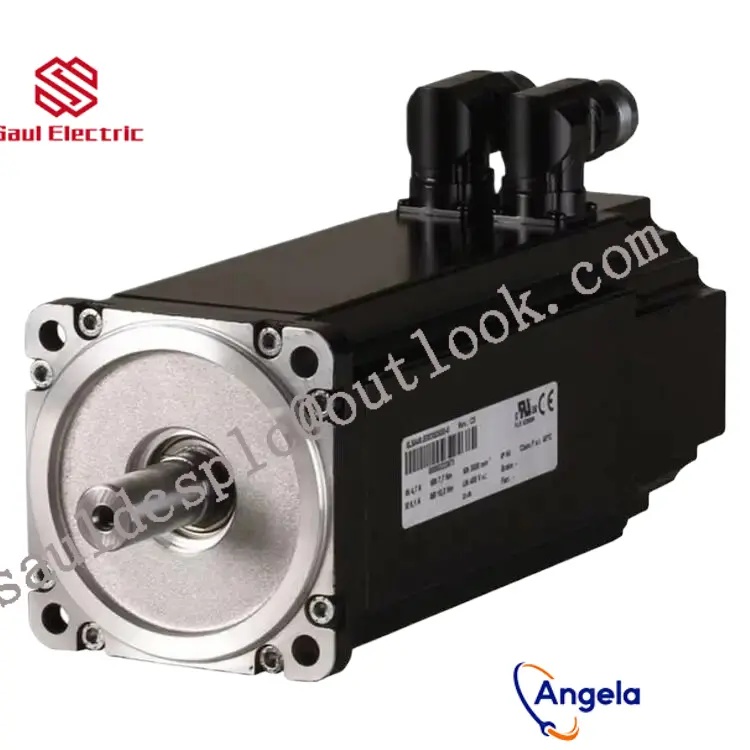
- High Performance: The 8MSA3L.R0-B5 servo motor offers high precision, rapid response, and excellent stability, meeting the demands of various complex automation applications.
- Integrated Safety Technology: B&R”s servo motors incorporate advanced safety technologies, such as the openSAFETY standard,
- ensuring the safety of operators while supporting machine functionality. This safety technology adapts to changing configurations and operates reliably worldwide.
- Easy Management: With intelligent safety response capabilities, the 8MSA3L.R0-B5 servo motor simplifies machine option management without compromising safety levels.
- This helps reduce downtime risks and enhance production efficiency.
- Networked Collaboration: B&R”s integrated, networked safety technology enables coordinated responses to safety events across the entire production line.
- The use of safety standards like openSAFETY ensures secure communication and interoperability between devices from different manufacturers.
- Powerful Software Support: B&R”s Automation Studio software development platform provides robust support for configuring, commissioning,
- and maintaining servo motors. Users can easily accomplish various automation tasks through this platform.
III. Application Areas
IV. Product Advantages
- Genuine Products: The 8MSA3L.R0-B5 servo motor is manufactured in Austria, ensuring product quality and performance.
- Professional Services: B&R has a professional technical support and after-sales service team capable of providing timely and efficient technical support and solutions to users.
- Customization Options: B&R offers customized servo motor solutions to meet the specific needs of different users.
Performance characteristics and applications of PCC industrial automation products from B&R
Introduction
Plastic extruder is a key equipment in the extrusion production line of special-shaped materials (such as the production of plastic steel doors and windows)
and the production line of aluminum-plastic composite pipes.
The extruder is divided into three zones from the feeding end to the head: feeding zone, melting zone, and homogenization zone. In the feeding area, solid plastic is
transported forward and gradually compacted through friction with the material barrel; In the melting zone, solid plastic is heated and melted, forming a layer of molten film at the liquid-solid interface.
When the thickness of the molten film exceeds the gap between the screw fin and the barrel, the molten material is scraped off by the screw fin, forming a molten pool
on the front side of the screw fin and a solid melt bed on the back side; In the homogenization zone, the material is subjected to four types of motion, including positive flow, side flow, reverse flow
, and leakage flow, during the process of screw advancement, resulting in sufficient mixing, plasticization, and continuous flow through the die under a certain pressure to form a continuous body.
Temperature and speed control are very important in extruders.
The industrial automation product PCC from B&R is a new generation programmable computer controller that combines the advantages of PLC and industrial computers.
It has various standard control functions, and the hardware adopts a modular structure that can be flexibly configured. It can be plugged and unplugged with electricity and has high reliability.
PCC supports multitasking time-sharing operating systems and provides 8 task classes with different cycle times and priorities. The task level with high priority, namely high-speed tasks,
has a shorter execution cycle (the cycle can be set by the user, ranging from 1ms to 20ms), while the cycle time of standard tasks can be set from 10ms to 5000ms. And each task level can contain multiple
specific tasks, among which the priority level can be further subdivided.
The multi processor and intelligent I/O technology of PCC make it highly intelligent. The intelligent module has its own CPU, and its motion module is equipped with high-precision
and high-quality motion control algorithms. The temperature module is equipped with self-learning temperature regulation algorithms (PID and fuzzy regulation technology).
The intelligent temperature PIDxh software can automatically calculate the PID parameters required for different temperature controls, and the PID adjustment of process control can reach 50 μ s per loop.
PCC products use an open bus structure, which facilitates communication with various systems. They provide hardware modules that support CAN BUS and come with a CAN interface. Therefore, it is easy
to achieve physical connection of CAN BUS and communicate between PCC series products through corresponding communication programs. The frame driver
is a software toolbox designed by B&R to enable communication with third-party devices. As Frame Driver is a free communication protocol, it is very convenient to
write communication protocols for serial interfaces such as RS-232, RS-485/422, TTY, etc. In typical data communication, users must have a clear understanding of the details of the ports in order to operate the various pins of the interface
through programming. And the frame driver consolidates these operations, allowing users to directly transmit read and write data through frame driver commands without knowing the details of the interface.
PCC provides structured high-level language PL2000 (similar to C language), which can also be programmed using
ladder diagrams (LAD) and instruction lists (STL), and has powerful data processing and computation capabilities.
This article introduces the control of four extruders by PCC in the aluminum-plastic composite pipe production line.
1. Composition and functions of the system
Figure 1 shows the system diagram of PCC controlling four extruders. All four extruders are single screw extruders: the main motor of the inner tube extruder screw
is a 75kW DC motor; The main motor of the inner tube coating extruder screw is a 55kW DC motor; The main motor for the screw of the outer tube coating extruder is
a 55kW DC motor; The main motor of the outer tube extruder is a 45kW DC motor. The screw DC motors of the four extruders are all driven by the digital DC speed
control system E590, and they communicate with PCC through RS-422 via the IF2 port of the main station processor module. The main motor of the traction machine is
a three-phase AC motor, all driven by Lenze frequency converter. They communicate with PCC through the IF2 port of the main station interface module in RS-485 mode.
The upper computer is the PROVIT-5000 series industrial control computer from B&R, used for centralized monitoring of all equipment on the human-machine interface.
The control of the extruder uses PCC2005 as the master station and two PCC2003 as slave stations, including power module PS465, processor module,
interface module, temperature input module, analog input module, analog output module, digital input module, and digital output module. The industrial computer, master station,
and two slave stations achieve real-time communication through CAN fieldbus.