


Description
I. Brand Background
II. Product Features
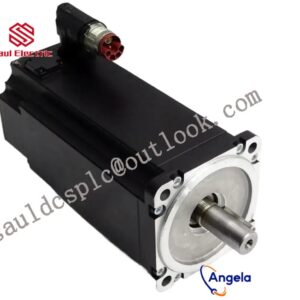
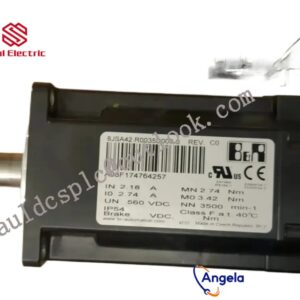
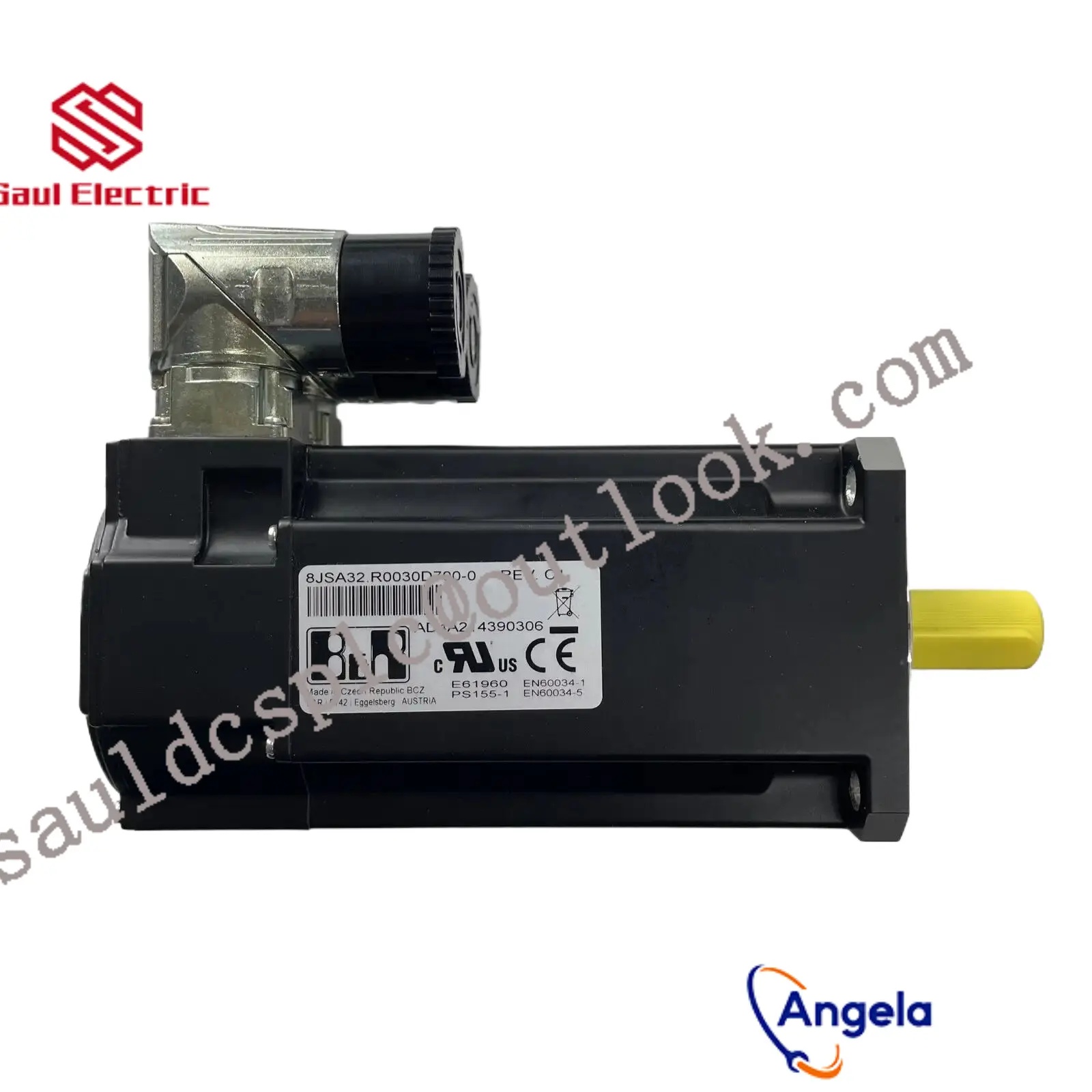
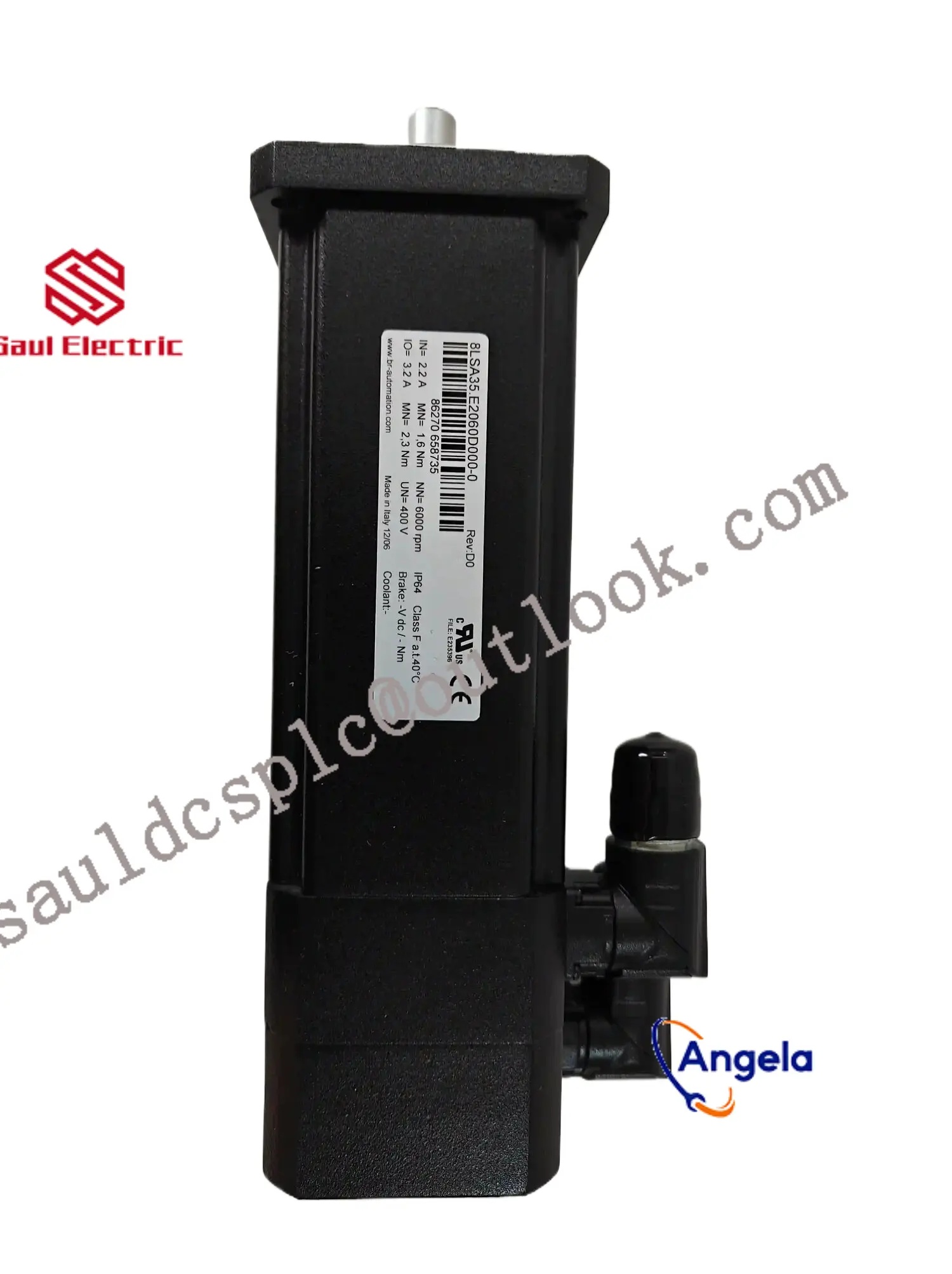
- High Performance: The 8MSA2X.E4-43 servo motor offers high precision, rapid response, and excellent stability, meeting the demands of various complex automation applications.
- Integrated Safety Technology: B&R”s servo motors incorporate advanced safety technologies, such as the openSAFETY standard,
- ensuring the safety of operators while supporting machine functionality. This safety technology adapts to changing configurations and operates reliably worldwide.
- Easy Management: With intelligent safety response capabilities, the 8MSA2X.E4-43 servo motor simplifies machine option management without compromising safety levels.
- This helps reduce downtime risks and enhance production efficiency.
- Networked Collaboration: B&R”s integrated, networked safety technology enables coordinated responses to safety events across the entire production line.
- The use of safety standards like openSAFETY ensures secure communication and interoperability between devices from different manufacturers.
- Powerful Software Support: B&R”s Automation Studio software development platform provides robust support for configuring, commissioning,
- and maintaining servo motors. Users can easily accomplish various automation tasks through this platform.
III. Application Areas
IV. Product Advantages
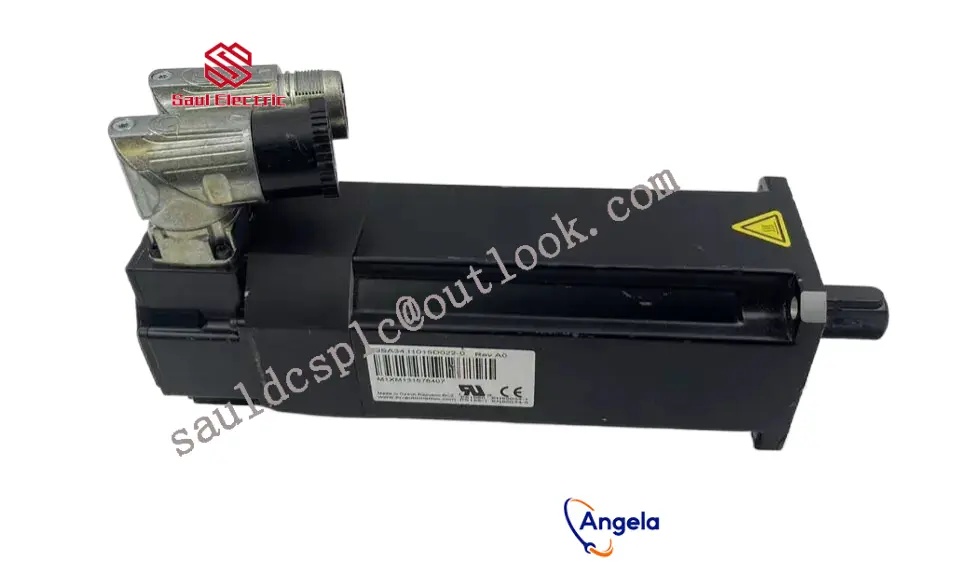
- Genuine Products: The 8MSA2X.E4-43 servo motor is manufactured in Austria, ensuring product quality and performance.
- Professional Services: B&R has a professional technical support and after-sales service team capable of providing timely and efficient technical support and solutions to users.
- Customization Options: B&R offers customized servo motor solutions to meet the specific needs of different users.
FOC motors and BLDC motors play important roles in electric vehicles and other application fields, but they have some differences in control methods and performance
characteristics. The following is a comparison between FOC motor and BLDC motor:
1、 Definition and Working Principle
FOC motor:
FOC (Field Oriented Control) is an advanced motor control technology that achieves efficient motor operation through precise control of stator current and rotor position.
The essence of FOC algorithm is matrix transformation, which precisely controls the motor magnetic field through complex mathematical algorithms.
BLDC motor:
BLDC (Brushless Direct Current) is a motor that converts electrical energy into rotational motion, and its basic structure includes a stator and rotor.
The stator of a BLDC motor is an energized coil, and the rotor is a permanent magnet. By controlling the magnitude and direction of the current, the rotation of the rotor can be controlled.
2、 Control method
FOC motor:
FOC motor adopts vector control method, which achieves efficient and smooth operation of the motor by accurately controlling the magnitude, direction, and phase of the motor stator current.
FOC control technology can be applied to both sensory FOC and non sensory FOC scenarios. Sensing FOC detects rotor position through sensors, while non sensing FOC estimates rotor position through algorithms.
BLDC motor:
The control method of BLDC motor is relatively simple, usually using square wave control or sine wave control.
The most representative method in square wave control is the six step commutation method, which generates a rotating magnetic field by switching the direction of current in different states.
Sine wave control generates a smooth rotating magnetic field by continuously changing the magnitude and direction of the current.
3、 Performance characteristics
FOC motor:
FOC motors have the characteristics of high efficiency, low noise, low vibration, high power density, and fast dynamic response.
FOC control technology can accurately control motor torque and power factor, improving the overall performance of the motor.
BLDC motor:
BLDC motors have the characteristics of high efficiency, long lifespan, low noise, high torque, and low maintenance costs.
BLDC motors have good speed regulation performance, can smoothly regulate speed within a wide range, and have high starting torque and good low-speed performance.
4、 Application scenarios
FOC motor:
FOC motors are mainly used in high-performance application scenarios, such as industrial automation, new energy vehicles, electric bicycles, and electric motorcycles.
In new energy vehicles, FOC motors serve as driving motors that can enhance the vehicle”s range, power performance, and driving stability.
BLDC motor:
BLDC motors have a wide range of applications, including white goods, fans, pumps, power tools, automotive electronics, and other fields.
In new energy vehicles, BLDC motors are mainly used for automatic window operation, sunroof actuators, rearview mirror adjusters, air conditioning, and HVAC systems.
5、 Development Trends
FOC motor:
With the continuous development of electric vehicle technology, FOC motors are moving towards integration, intelligence, and efficiency.
Integrated design can simplify the drive system structure of electric vehicles and improve the reliability and stability of the system.
Intelligent control can achieve real-time monitoring and intelligent control of FOC motors, improving the driving performance and fault diagnosis capability of electric vehicles.
Efficient design can further improve the efficiency and energy utilization of FOC motors, reducing the energy consumption and emissions of electric vehicles.
BLDC motor:
BLDC motors are constantly being optimized and upgraded in terms of control algorithms and magnetic materials.
By optimizing the control algorithm and motor body design, the efficiency and response performance of BLDC motors can be further improved.
The use of new high-performance magnetic materials can improve the torque and power density of BLDC motors to meet the requirements
of more efficient, low-power, low-noise, and multifunctional complex control tasks.
In summary, there are differences between FOC motors and BLDC motors in terms of definition, control methods, performance characteristics,
application scenarios, and development trends. The choice of motor depends on specific application requirements and conditions.