


Description
I. Brand Background
II. Product Features
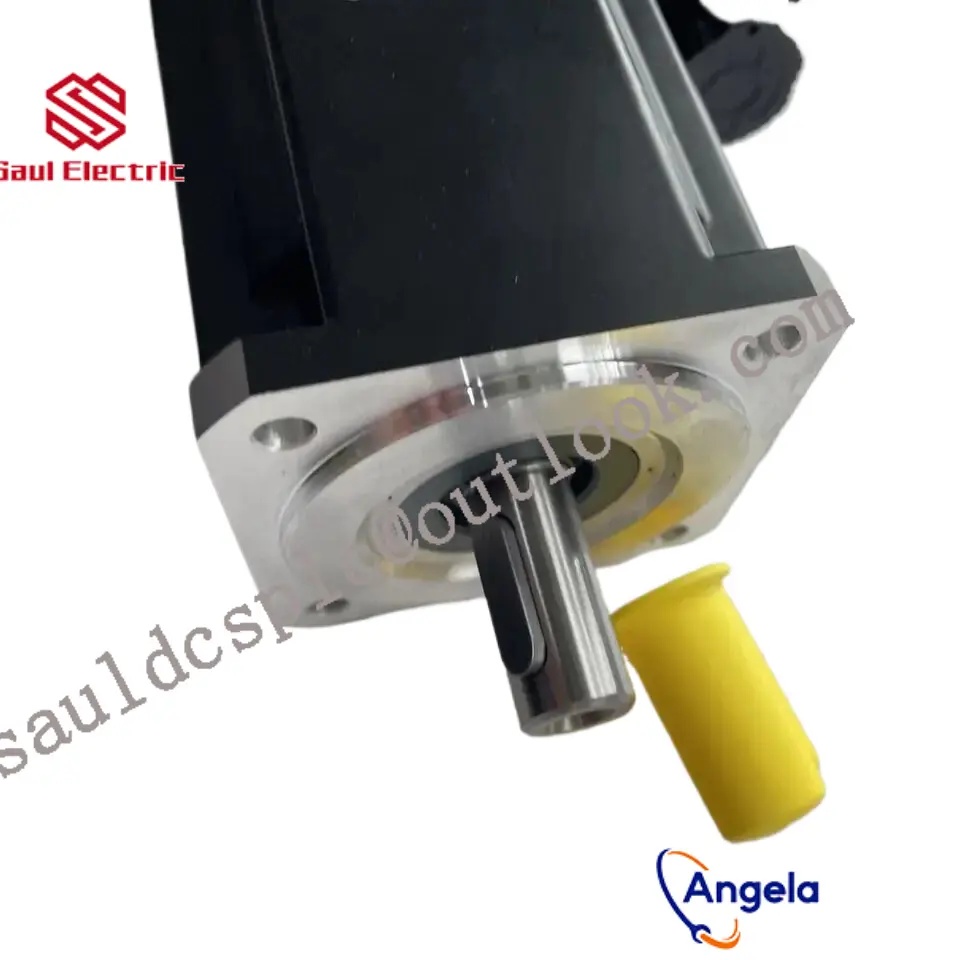
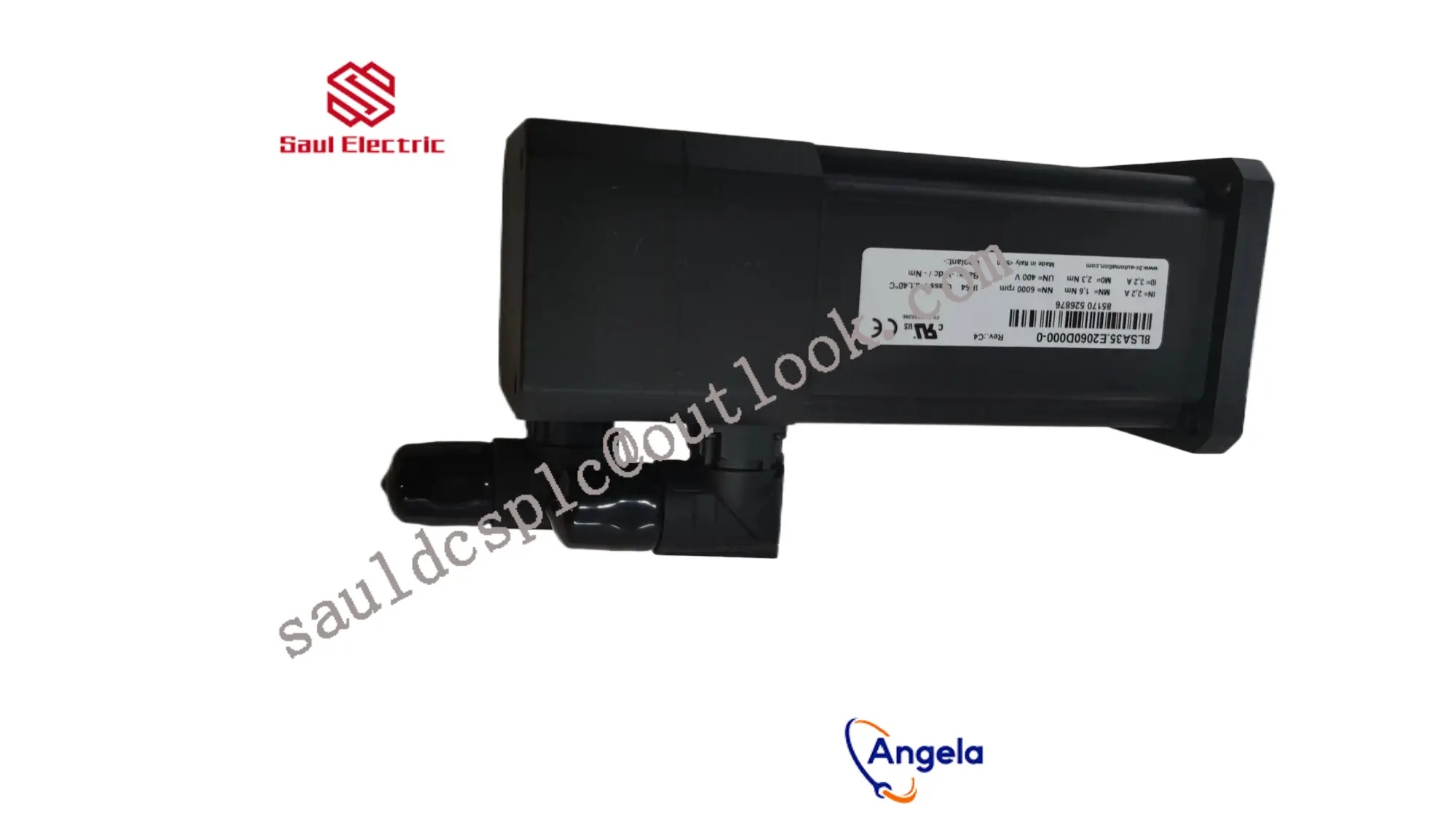
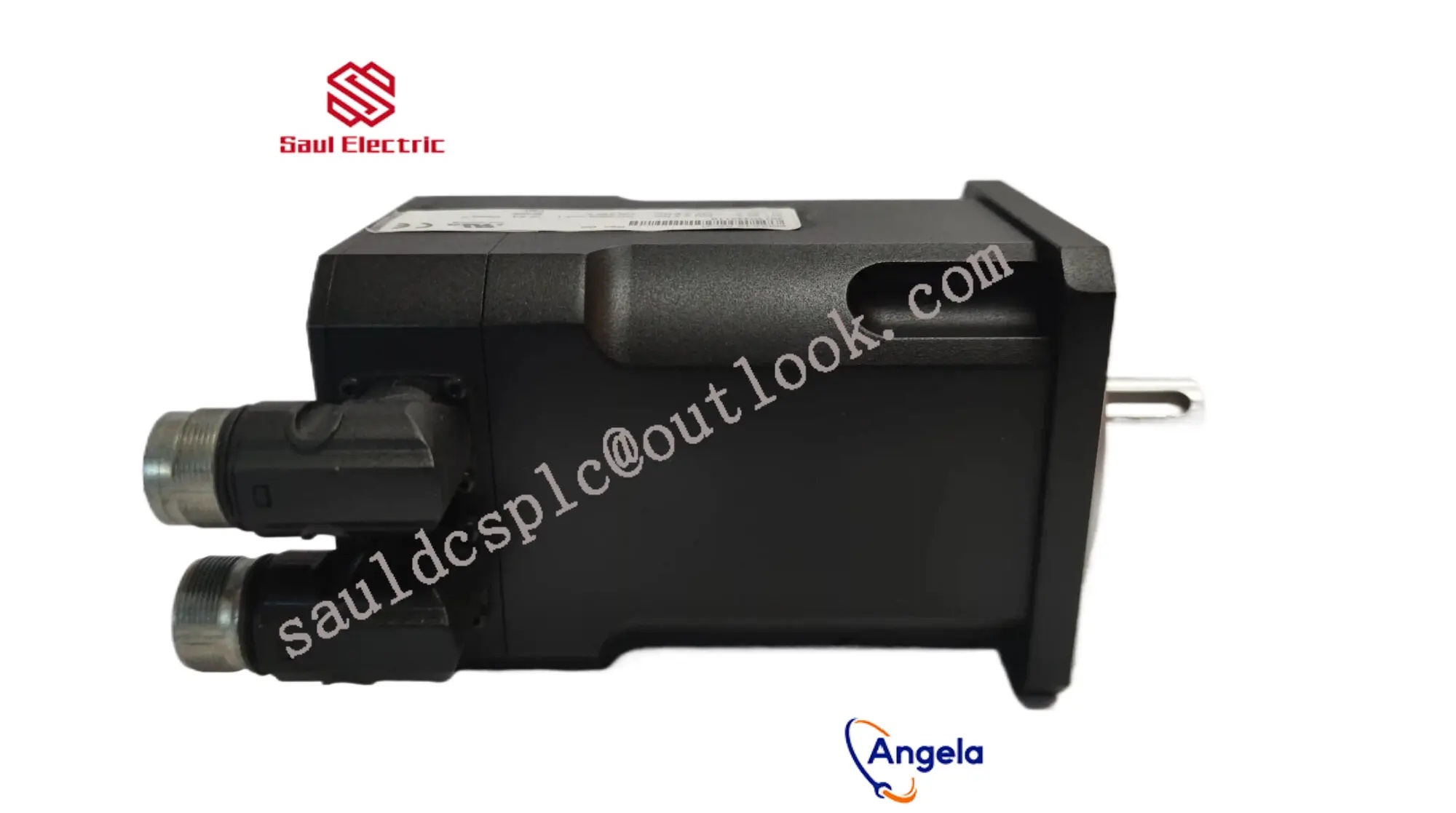
- High Performance: The 8LSA45.E0022D200-0 servo motor offers high precision, rapid response, and excellent stability, meeting the demands of various complex automation applications.
- Integrated Safety Technology: B&R”s servo motors incorporate advanced safety technologies, such as the openSAFETY standard,
- ensuring the safety of operators while supporting machine functionality. This safety technology adapts to changing configurations and operates reliably worldwide.
- Easy Management: With intelligent safety response capabilities, the 8LSA45.E0022D200-0 servo motor simplifies machine option management without compromising safety levels.
- This helps reduce downtime risks and enhance production efficiency.
- Networked Collaboration: B&R”s integrated, networked safety technology enables coordinated responses to safety events across the entire production line.
- The use of safety standards like openSAFETY ensures secure communication and interoperability between devices from different manufacturers.
- Powerful Software Support: B&R”s Automation Studio software development platform provides robust support for configuring, commissioning,
- and maintaining servo motors. Users can easily accomplish various automation tasks through this platform.
III. Application Areas
IV. Product Advantages
- Genuine Products: The 8LSA45.E0022D200-0 servo motor is manufactured in Austria, ensuring product quality and performance.
- Professional Services: B&R has a professional technical support and after-sales service team capable of providing timely and efficient technical support and solutions to users.
- Customization Options: B&R offers customized servo motor solutions to meet the specific needs of different users.
Stepper motor and servo motor
Stepper motor is a discrete motion device that is fundamentally related to modern digital control technology. In current domestic digital control systems,
stepper motors are widely used. With the emergence of fully digital AC servo systems, AC servo motors are increasingly being used in digital control systems.
In order to adapt to the development trend of digital control, stepper motors or fully digital AC servo motors are mostly used as executive motors in motion control systems.
Although the two have similar control methods (pulse train and directional signal), there are significant differences in their performance and application scenarios. Now let”s compare the performance of the two.
Different control precision
The step angle of a two-phase hybrid stepper motor is generally 3.6 degrees and 1.8 degrees, while the step angle of a five phase
hybrid stepper motor is generally 0.72 degrees and 0.36 degrees. There are also some high-performance stepper motors with smaller step angles.
A stepper motor produced by Sitong Company for slow wire cutting machine tools, with a step angle of 0.09 degrees;
The step angle of the three-phase hybrid stepper motor produced by BERGER LAHR in Germany can be set to 1.8 degrees, 0.9 degrees, 0.72 degrees, 0.36 degrees, 0.18 degrees, 0.09 degrees,
0.072 degrees, and 0.036 degrees through a toggle switch, compatible with the step angles of two-phase and five phase hybrid stepper motors.
The control accuracy of the AC servo motor is ensured by the rotary encoder at the rear end of the motor shaft. Taking Panasonic”s fully digital AC servo motor as an example, for a
motor with a standard 2500 line encoder, due to the use of quadruple frequency technology inside the driver, its pulse equivalent is 360 degrees/10000=0.036 degrees. For a motor with a
17 bit encoder, for every 217=131072 pulses received by the driver, the motor rotates once, resulting in a pulse equivalent of 360 degrees/131072=9.89 seconds.
It is 1/655 of the pulse equivalent of a stepper motor with a step angle of 1.8 degrees.
Different low-frequency characteristics
Stepper motors are prone to low-frequency vibration at low speeds. The vibration frequency is related to the load condition and the performance of the driver. It is generally believed that the
vibration frequency is half of the no-load take-off frequency of the motor. The low-frequency vibration phenomenon determined by the working principle of the stepper motor is very detrimental to the
normal operation of the machine. When a stepper motor operates at low speeds, damping techniques should generally be used to overcome low-frequency vibration phenomena,
such as adding dampers to the motor or using subdivision techniques on the driver.
The AC servo motor runs very smoothly, and there is no vibration even at low speeds. The communication servo system has resonance suppression function, which can cover the insufficient rigidity
of machinery, and the system has frequency analysis function (FFT) inside, which can detect the resonance point of machinery and facilitate system adjustment.
Different moment frequency characteristics
The output torque of a stepper motor decreases with increasing speed and sharply decreases at higher speeds, so its maximum operating speed is generally between
300-600 RPM. AC servo motors have constant torque output, which means they can output rated torque within their rated speed (usually 2000RPM or 3000RPM),
and constant power output above the rated speed.
Different overload capacities