


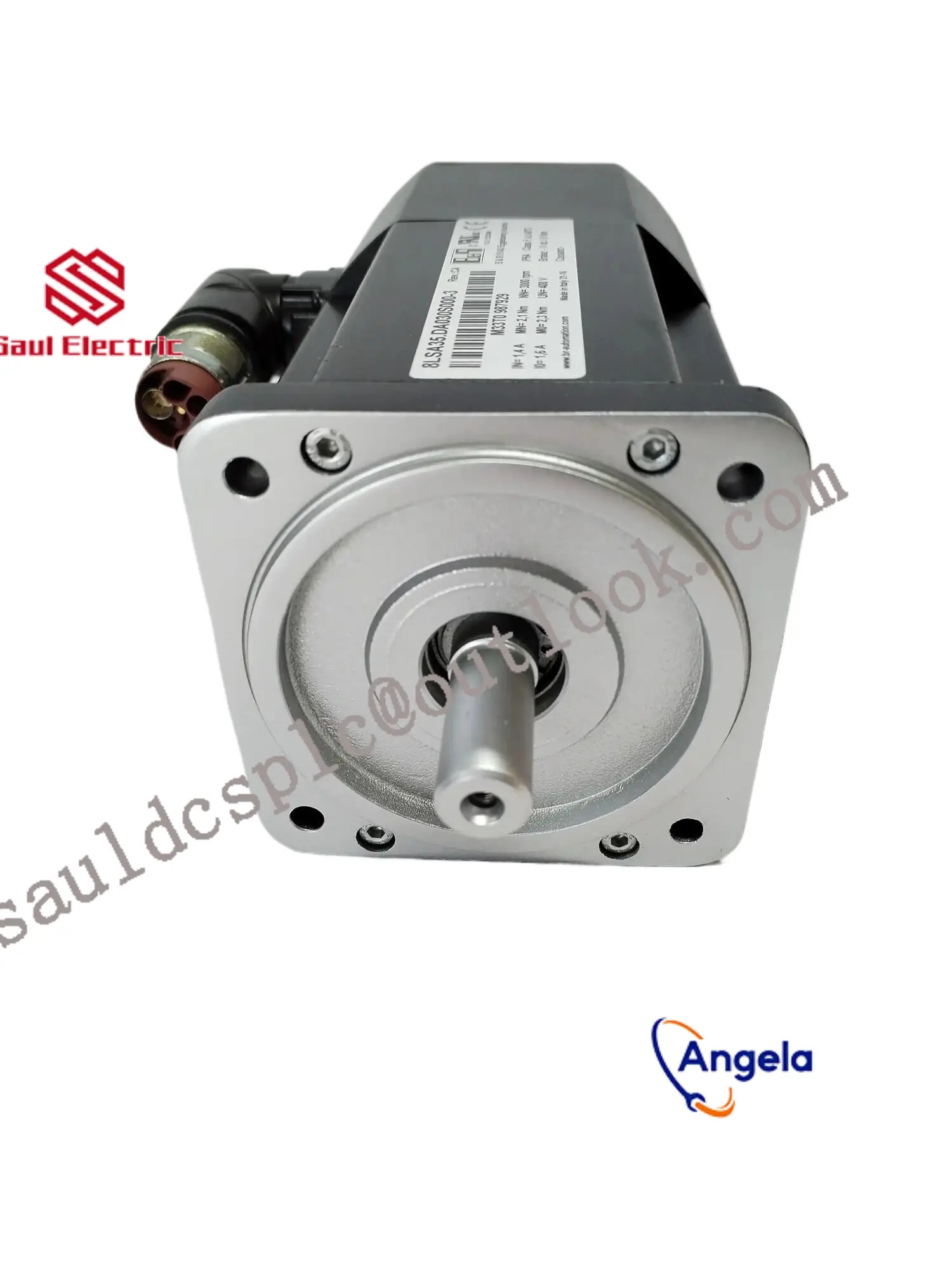
Description
I. Brand Background
II. Product Features
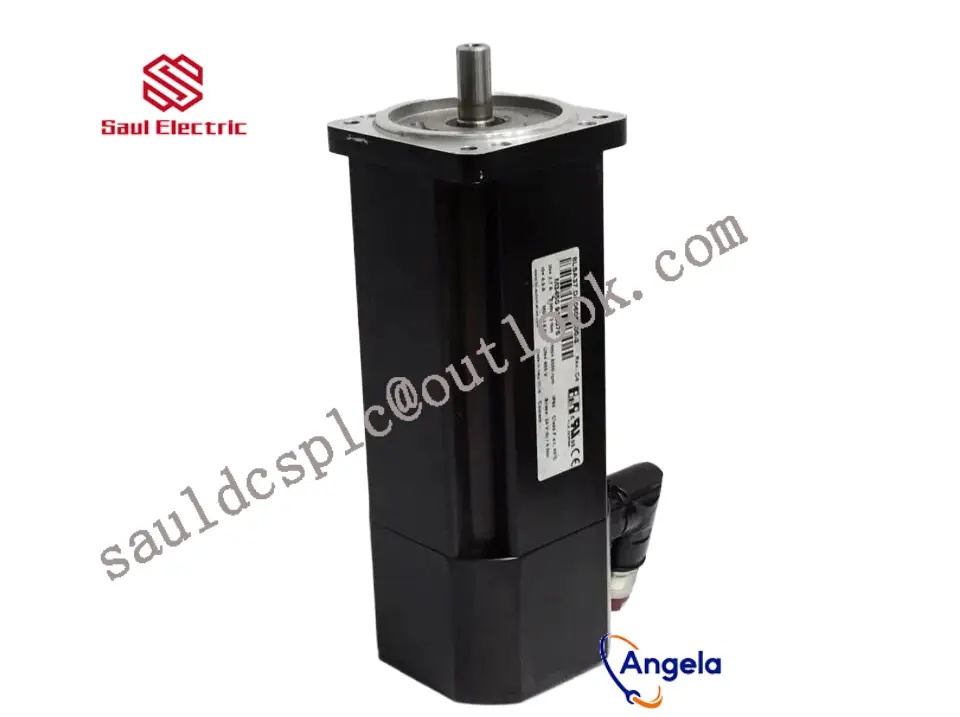
- High Performance: The 8LSA44.EB060D000-0 servo motor offers high precision, rapid response, and excellent stability, meeting the demands of various complex automation applications.
- Integrated Safety Technology: B&R”s servo motors incorporate advanced safety technologies, such as the openSAFETY standard,
- ensuring the safety of operators while supporting machine functionality. This safety technology adapts to changing configurations and operates reliably worldwide.
- Easy Management: With intelligent safety response capabilities, the 8LSA44.EB060D000-0 servo motor simplifies machine option management without compromising safety levels.
- This helps reduce downtime risks and enhance production efficiency.
- Networked Collaboration: B&R”s integrated, networked safety technology enables coordinated responses to safety events across the entire production line.
- The use of safety standards like openSAFETY ensures secure communication and interoperability between devices from different manufacturers.
- Powerful Software Support: B&R”s Automation Studio software development platform provides robust support for configuring, commissioning,
- and maintaining servo motors. Users can easily accomplish various automation tasks through this platform.
III. Application Areas
IV. Product Advantages
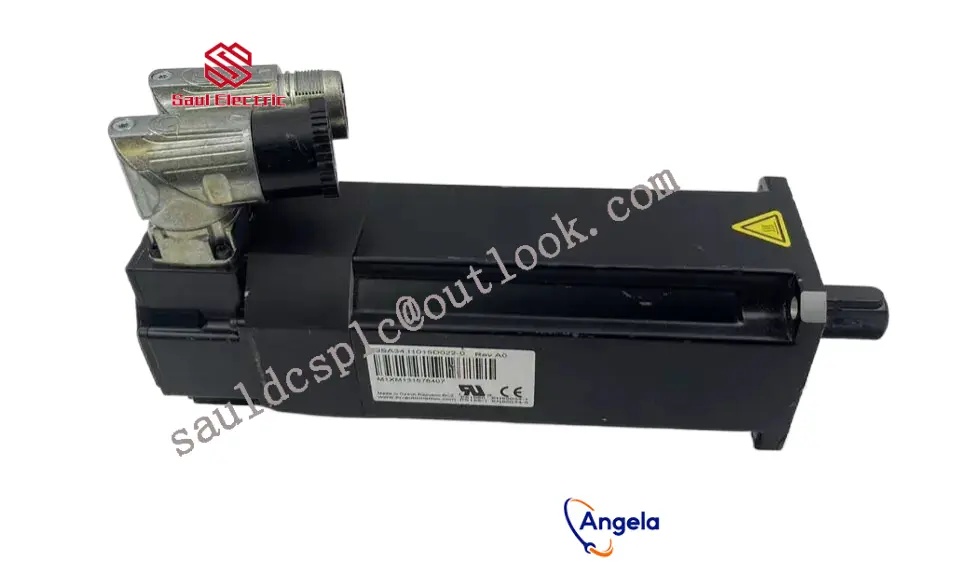
- Genuine Products: The 8LSA44.EB060D000-0 servo motor is manufactured in Austria, ensuring product quality and performance.
- Professional Services: B&R has a professional technical support and after-sales service team capable of providing timely and efficient technical support and solutions to users.
- Customization Options: B&R offers customized servo motor solutions to meet the specific needs of different users.
Stepper motors and servo motors are important control components in the field of industrial transmission control, with a wide range of applications.
But what is the difference between stepper motors and servo motors?
Only by understanding the differences between stepper motors and servo motors can we accurately determine whether to use a stepper motor or a servo motor.
Let”s first take a look at the concepts of stepper motors and servo motors.
Servo motors can control speed and position accuracy very accurately, and can convert voltage signals into torque and speed to drive control objects.
1. The control accuracy of stepper motors and servo motors is different. The step angle of a two-phase hybrid stepper motor is generally 1.8 °,
and the step angle of a three-phase hybrid stepper motor is 1.2 °. There are also some high-performance stepper motors with smaller step angles.
The control accuracy of the AC servo motor is ensured by the rotary encoder at the rear end of the motor shaft. For servo motors with standard 2500 line
encoders, the pulse equivalent is 360 °/10000=0.036 ° due to the use of quadruple frequency technology inside the driver.
For the vast majority of users, both mechanical transmission accuracy and photoelectric sensor positioning accuracy are not as high as the physical accuracy
of stepper motors and servo motors. It is unnecessary to pursue the highest accuracy of motors unilaterally.
2. Stepper motors and servo motors have different torque frequency characteristics.
The output torque of a stepper motor decreases with increasing speed and sharply decreases at higher speeds, so its maximum operating speed is generally
between 0-900RPM. AC servo motors have constant torque output, which means they can output rated torque within their rated speed (usually 1000-3000 RPM).
3. Stepper motors and servo motors have different overload capacities.
4. The performance of stepper motors and servo motors is different. The control of stepper motors is open-loop control. If the starting frequency is too high
or the load is too large, it is easy to cause step loss or stalling. If the speed is too high when stopping,
it is easy to cause overshoot. Therefore, in order to ensure its control accuracy, the problem of speed increase and decrease should be handled well.
5. The AC servo drive system is a closed-loop control system, and the driver can directly sample the feedback signal of the motor encoder. It consists of
a position loop and a speed loop internally, and generally does not experience step loss or overshoot of the stepper motor, making the control performance
more reliable. Servo motors are closed-loop systems, and servo drivers can automatically correct lost pulses and provide timely feedback to the controller in case
of stalling. Stepper motors are open-loop systems and must have sufficient torque margin to avoid stalling.
6. The speed response performance of stepper motors and servo motors is different.
7. It takes 100-2000 milliseconds for a stepper motor to accelerate from rest to operating speed. The acceleration performance of the communication servo system is
good, and it only takes a few milliseconds from static acceleration to its rated speed of 3000RPM, which can be used in control situations that require fast start stop.
8. Stepper motors and servo motors are important control components in the field of industrial transmission control, with a wide range of applications. But what is the
difference between stepper motors and servo motors? Only by understanding the differences between stepper motors and servo motors can we accurately determine
whether to use a stepper motor or a servo motor.