


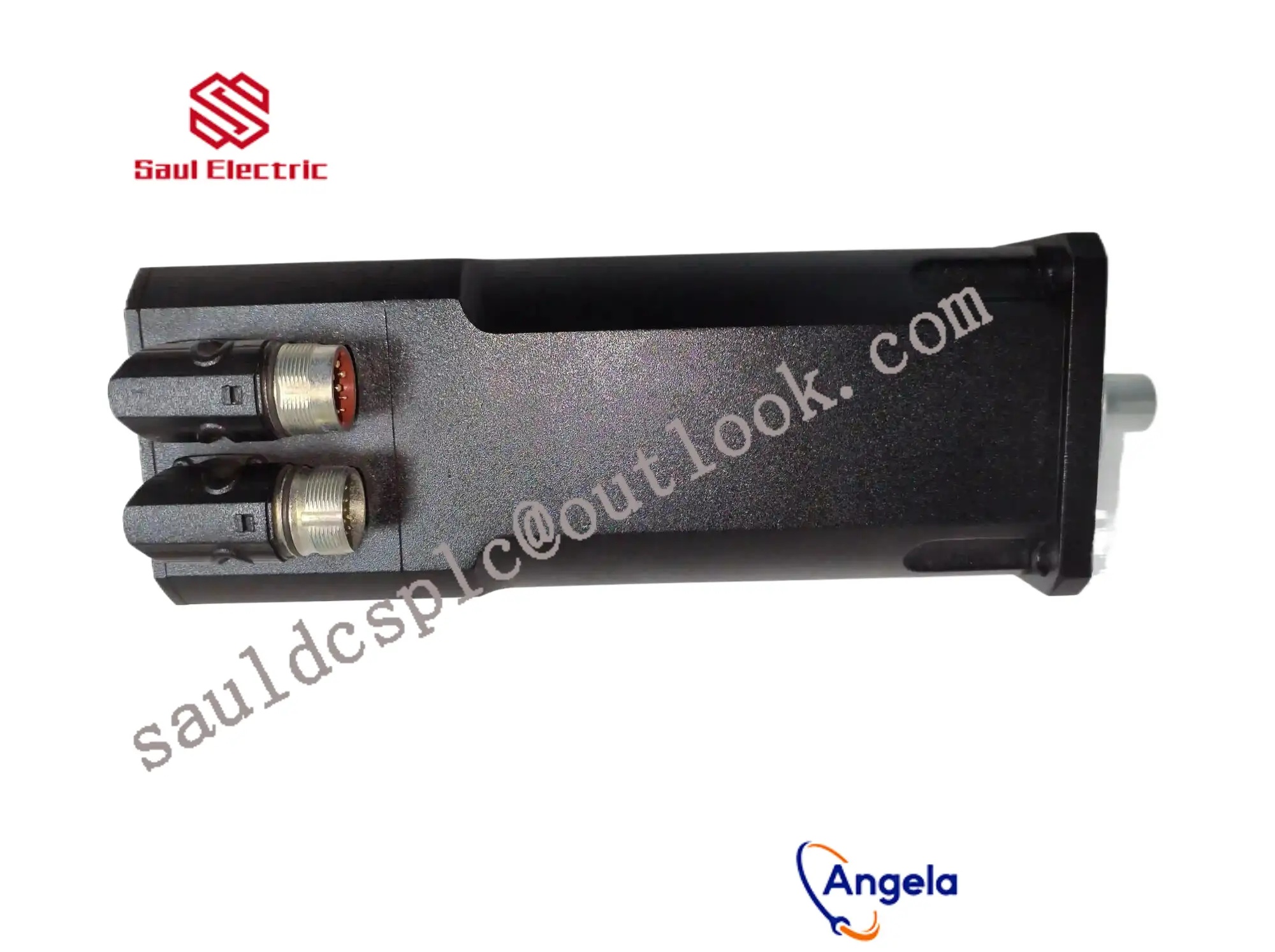
Description
I. Brand Background
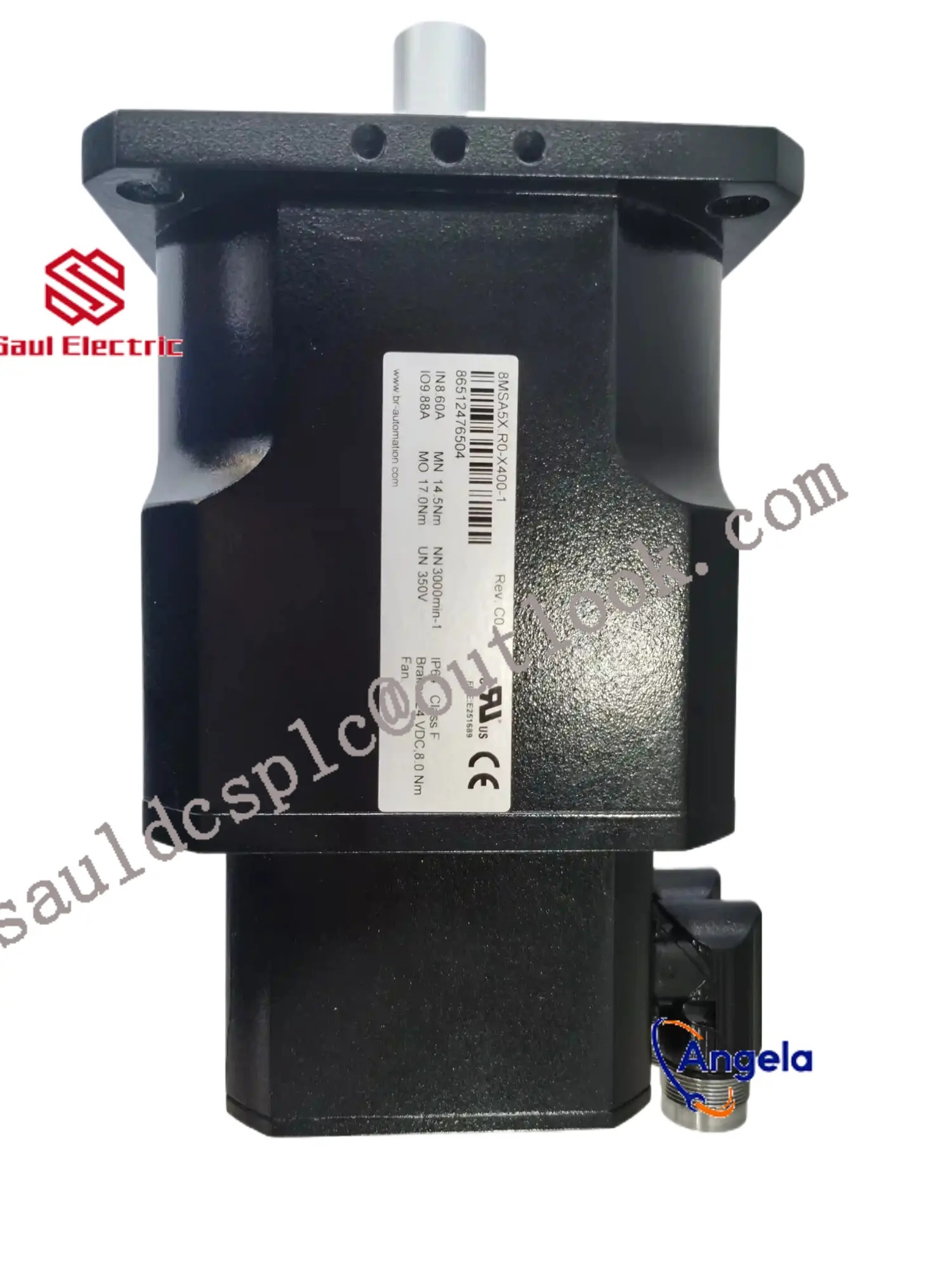
II. Product Features
- High Performance: The 8LSA43.R0030C600-0 servo motor offers high precision, rapid response, and excellent stability, meeting the demands of various complex automation applications.
- Integrated Safety Technology: B&R”s servo motors incorporate advanced safety technologies, such as the openSAFETY standard,
- ensuring the safety of operators while supporting machine functionality. This safety technology adapts to changing configurations and operates reliably worldwide.
- Easy Management: With intelligent safety response capabilities, the 8LSA43.R0030C600-0 servo motor simplifies machine option management without compromising safety levels.
- This helps reduce downtime risks and enhance production efficiency.
- Networked Collaboration: B&R”s integrated, networked safety technology enables coordinated responses to safety events across the entire production line.
- The use of safety standards like openSAFETY ensures secure communication and interoperability between devices from different manufacturers.
- Powerful Software Support: B&R”s Automation Studio software development platform provides robust support for configuring, commissioning,
- and maintaining servo motors. Users can easily accomplish various automation tasks through this platform.
III. Application Areas
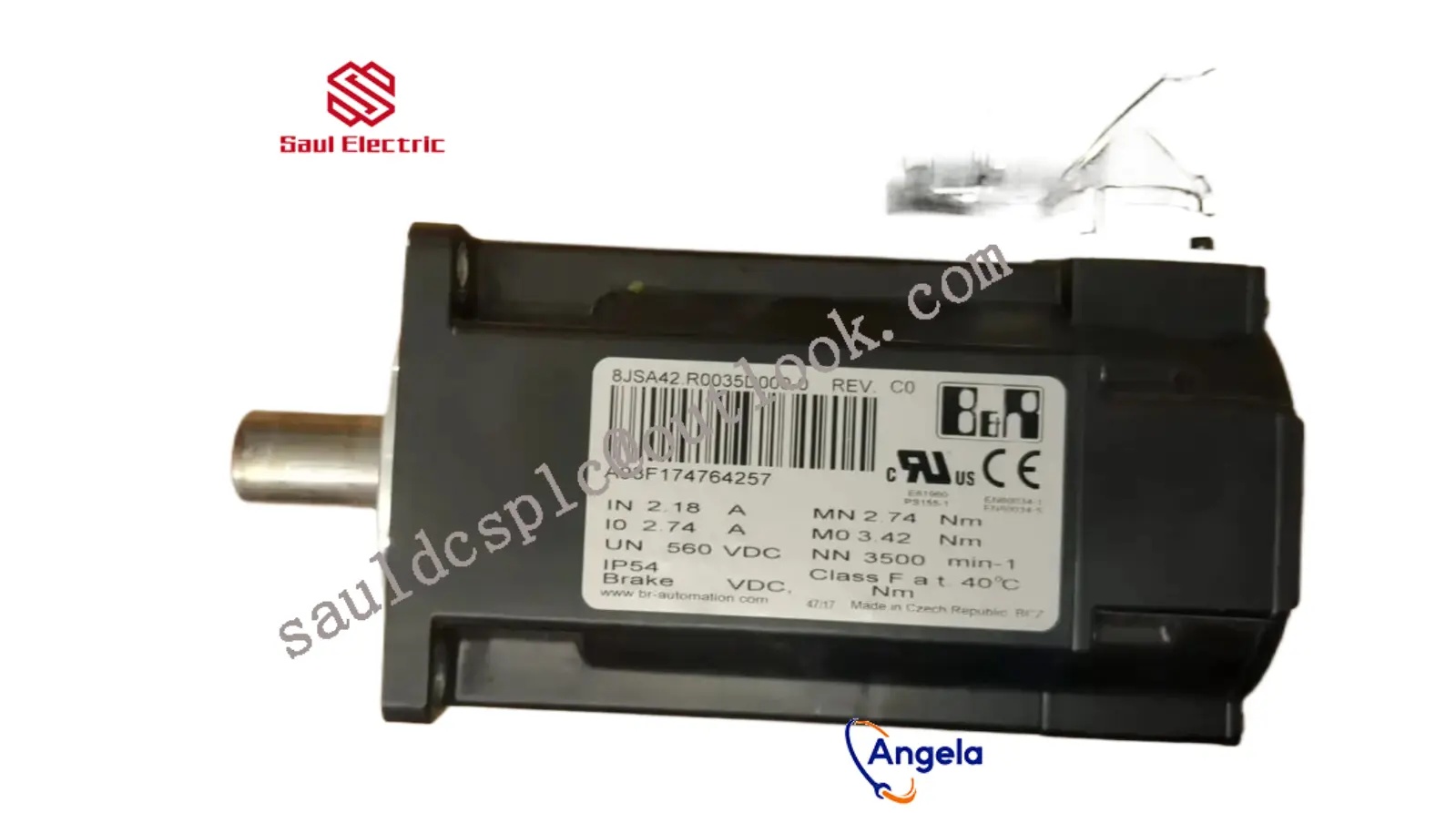
IV. Product Advantages
- Genuine Products: The 8LSA43.R0030C600-0 servo motor is manufactured in Austria, ensuring product quality and performance.
- Professional Services: B&R has a professional technical support and after-sales service team capable of providing timely and efficient technical support and solutions to users.
- Customization Options: B&R offers customized servo motor solutions to meet the specific needs of different users.
In this article, we will delve into how to improve the efficiency of motors.
Traditionally, there are two directions for motor design: copper motors and iron motors. Copper motors use electric fields
as the main source of motor torque, which involves the current (I) and number of enameled coils (N) in the motor torque formula. Therefore,
the design of copper motors usually requires more enameled wires, which has become the mainstream design trend at present. In contrast,
iron motors use larger silicon steel sheet areas and fewer enameled wires, utilizing spatial dimensions to obtain motor torque. However,
due to the large size and low energy density per unit area of iron motors, they are not popular in the market.
1. Copper motors and iron motors
Therefore, it is not difficult to determine that copper motors have a higher proportion of copper losses, while iron motors have a higher proportion of iron losses.
If we look up the commonly used magnetic material “silicon steel sheet” for motors, we will find that the iron loss label is expressed in W/KG,
indicating that the iron loss is related to the weight of the silicon steel sheet. Therefore, the use of larger silicon steel sheet sizes in iron motors also
means that the weight of silicon steel sheets is heavier, resulting in more iron loss.
2. Replace with larger silicon steel
The general method to reduce iron loss is to start with the replacement of silicon steel sheets; But for motor designers, the primary task
is to confirm the magnetic field state inside the silicon steel sheet. In the iron loss equation, we can see various forms of energy loss and
find corresponding solutions. However, there is an implicit loss that cannot be ignored, which is “magnetic leakage”. This leakage phenomenon
can cause a decrease in motor torque and may even lead to electromagnetic wave interference. There are two solutions to this leakage phenomenon,
the simplest of which is to replace the silicon steel sheet with a larger one, so that the contact area with the magnetic field lines is larger and the leakage is reduced.
3. Optimize magnetic field lines
In addition to replacing the silicon steel sheets, magnetic flux leakage can also be avoided by optimizing the magnetic field lines. Observing the figure below,
we can see that a small number of magnetic field lines deviate from the conventional path, which is what we generally refer to as magnetic leakage.
This phenomenon may cause a decrease in the torque of the motor and even generate electromagnetic wave interference.