


Description
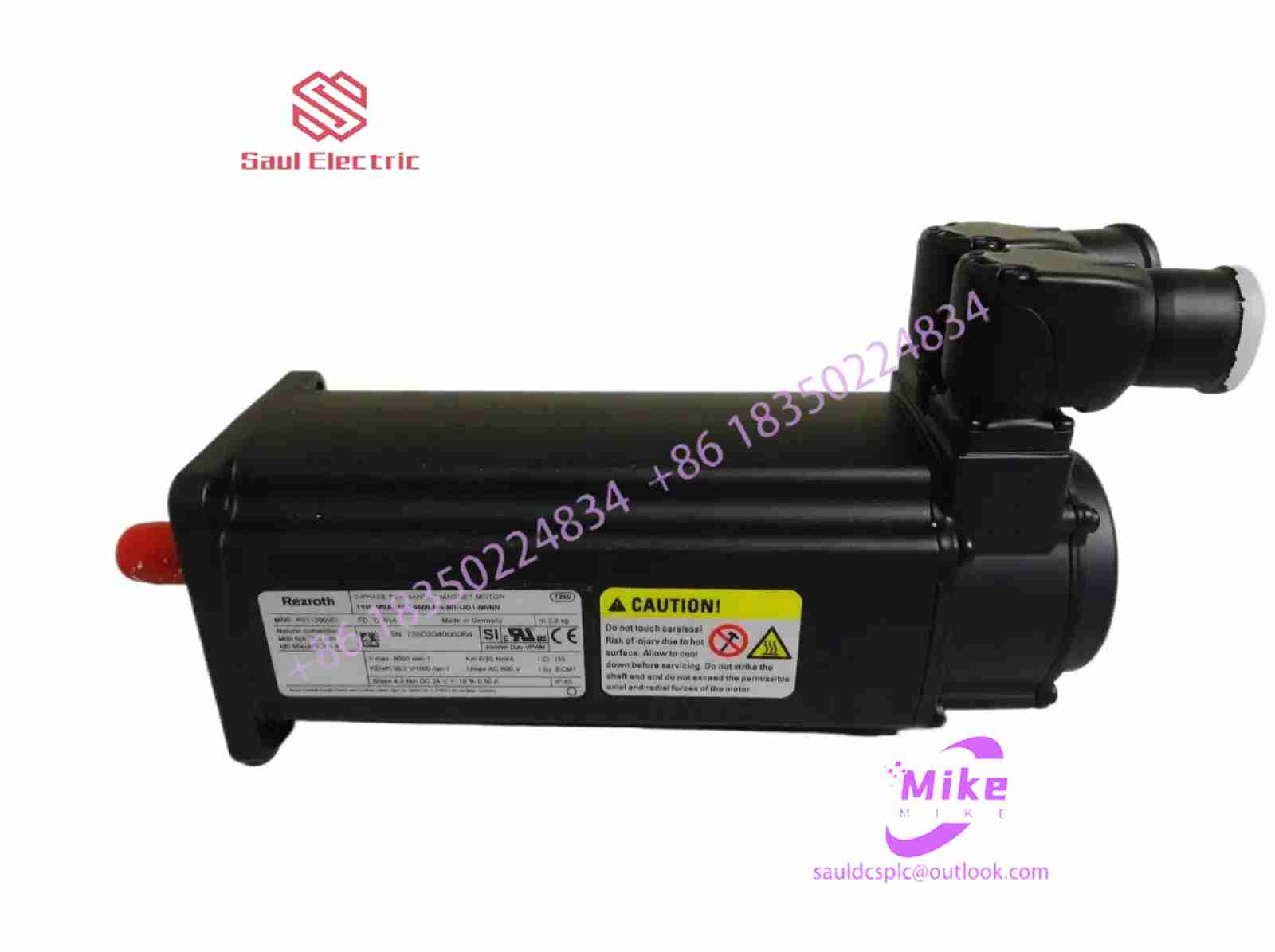
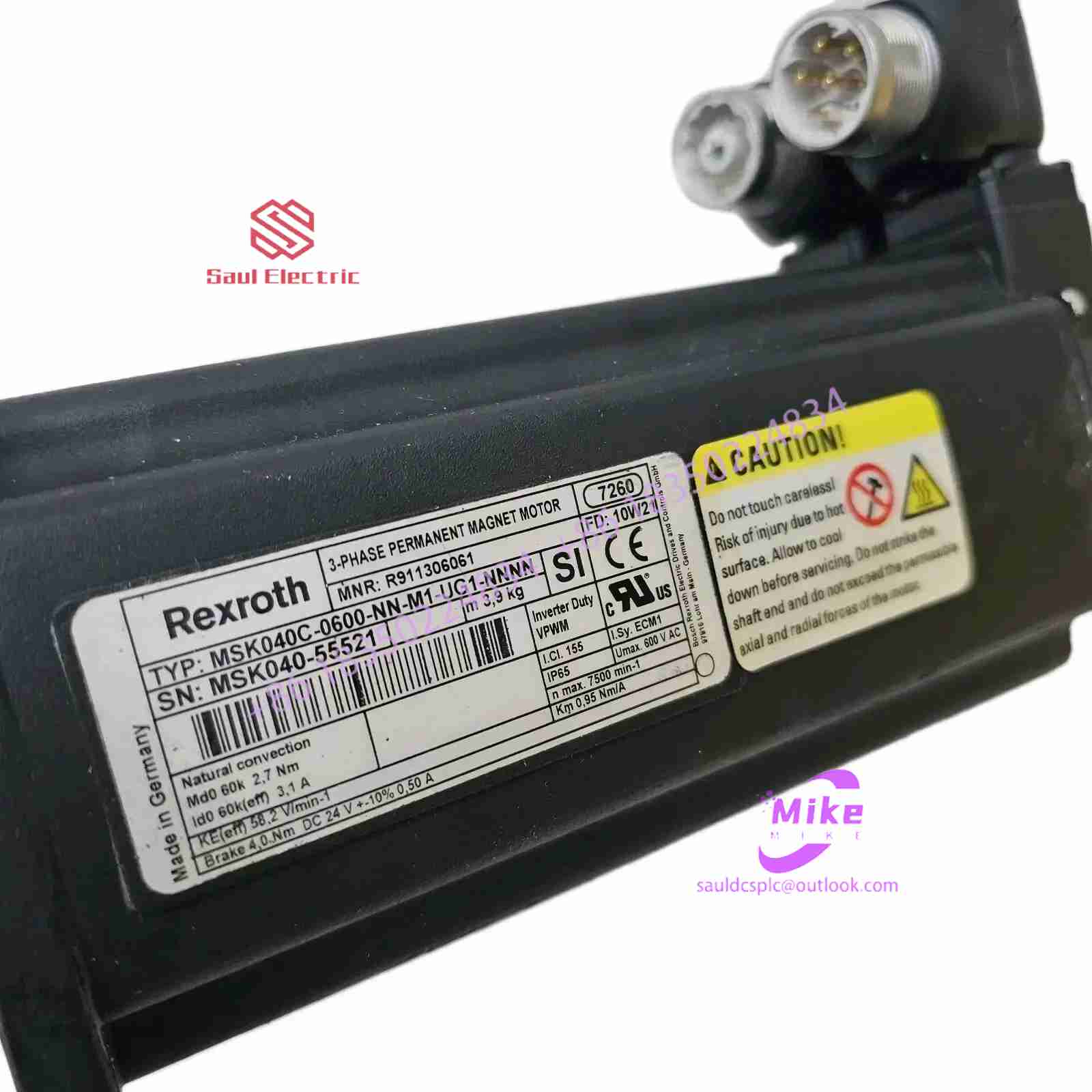
MSK050C-0300-NN-M1-UG1-NNNN Rexroth”s full range of motors
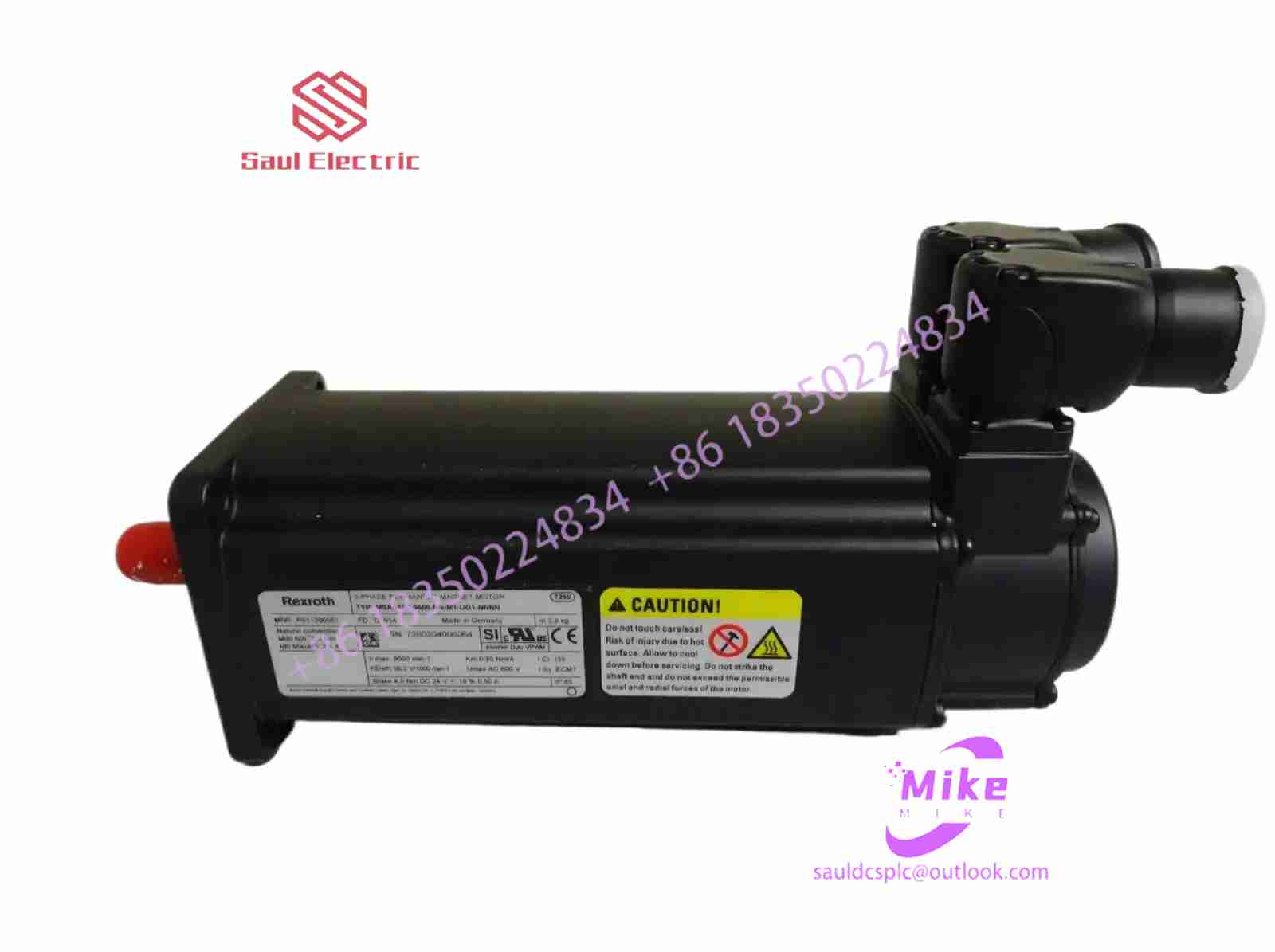
Introduction to MSK050C-0300-NN-M1-UG1-NNNN Motor
I. General Overview
The MSK050C-0300-NN-M1-UG1-NNNN is a high-performance synchronous servo motor produced by Bosch Rexroth, belonging to the IndraDyn S series. This motor is widely used in industrial automation due to its high torque, high speed, high precision, and excellent environmental adaptability.
II. Key Features
- High Torque Output:
- The maximum torque can reach 631Nm, meeting the needs of various high-load applications.
- Smooth torque output with minimal fluctuations ensures stable equipment operation.
- Wide Speed Range:
- The maximum speed can reach 9000rpm, suitable for applications requiring high-speed operation.
- A wide speed adjustment range allows for flexible adjustments based on actual needs.
- High-Precision Control:
- Equipped with a multi-turn absolute Hiperface encoder with an increment of 128, providing high-precision position feedback.
- High encoder resolution ensures precise and stable motor movement.
- Excellent Environmental Adaptability:
- High protection class, typically IP65 or above, enabling stable operation in harsh environments.
- Optional liquid cooling system available to handle heat dissipation in high-power applications.
- Compact Structure:
- The motor is designed to be compact, with a small size and light weight, facilitating easy installation and maintenance.
- Flat shaft design with shaft sealing rings prevents dust and moisture from entering the motor interior.
III. Application Scenarios
The MSK050C-0300-NN-M1-UG1-NNNN motor is widely used in various industrial automation fields requiring high precision and high torque, including but not limited to:
- Robot Arms:
- Provides high torque and precise position control, ensuring flexible movement and accurate positioning of robot arms.
- Automated Production Lines:
- Used to drive various automated equipment, such as conveyors and assembly machines, improving production efficiency and product quality.
- Packaging Machinery:
- Suitable for high-speed packaging machinery, such as filling machines and sealing machines, ensuring stable and accurate packaging processes.
- Conveyor Systems:
- Used to drive conveyor belts, rollers, and other conveying equipment, enabling fast and accurate material transportation.
IV. Technical Parameters
- Rated Power: Varies depending on the specific model and application scenario, but typically meets the needs of high-load applications.
- Rated Voltage: Usually an AC voltage, with the specific value determined by the motor model and配套 (matching) drive.
- Rated Current: Determined based on the motor power and voltage, ensuring stable motor operation under rated conditions.
- Encoder Type: Multi-turn absolute Hiperface encoder, providing high-precision position feedback.
- Protection Class: Typically IP65 or above, ensuring stable motor operation in harsh environments.
- Cooling Method: Natural convection cooling or optional liquid cooling system, selected based on application scenario and power requirements.
This introduction provides a comprehensive overview of the MSK050C-0300-NN-M1-UG1-NNNN motor, highlighting its key features, application scenarios, and technical parameters.
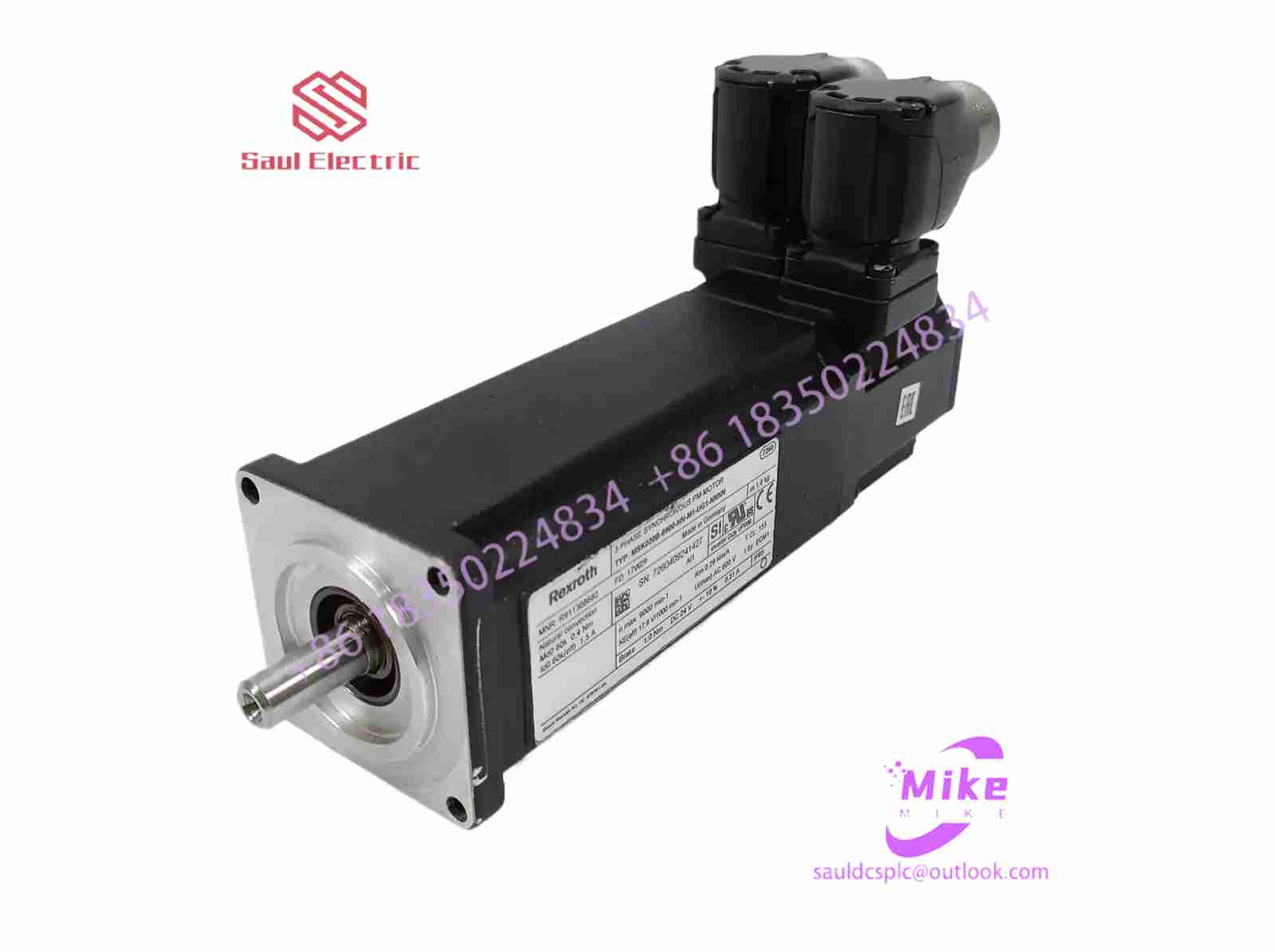
Servomotors need more space due to the requirements of absolute encoders. The lower pole count allows it to produce higher torque at higher speeds.
Stepper motors can operate in an open loop without an encoder, making them more compact.
Stop accuracy
For positioning applications, one of the key requirements that we must meet is the accuracy of the motor”s stop. Both stepper and servo motors can stop accurately.
The stop accuracy of a stepping motor depends on the quality of the winding (electrical) and the tooth structure (mechanical), while the accuracy
of a servo motor depends on the assembly accuracy, the encoder resolution andalgorithm.
Remember that the air gap between the rotor and stator is very thin, and the only friction is from its ball bearings. Frictional torque or gravity
load will cause a deviation in the actual stopped position, so there is a little error when you move from one position to another.
The errors that occur when we plot one full rotation of the motor are shown in the figure below.