


Description
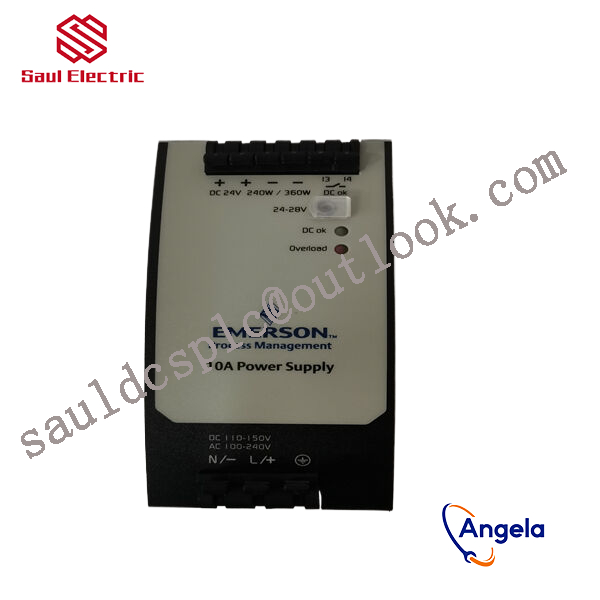
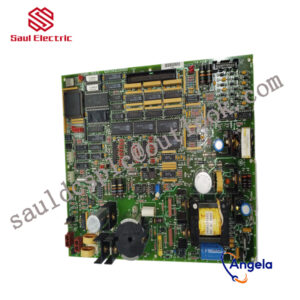
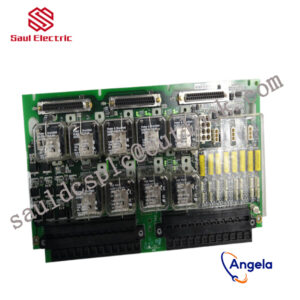
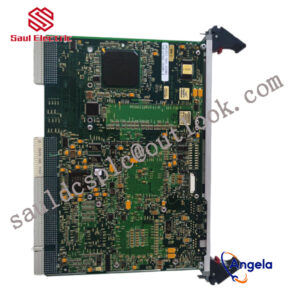
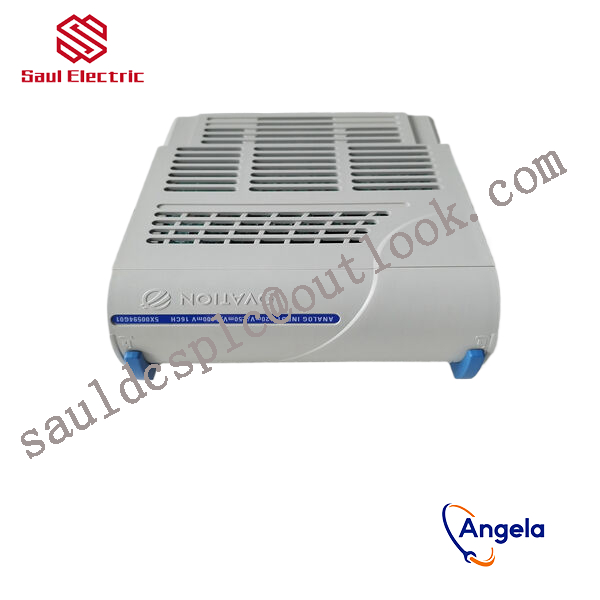
5X00300G02 New Emerson Ovation DCS Card
thereby controlling external devices or circuits.
Point motion control: It only requires the endpoint position and is independent of the intermediate process of motion, that is, the motion trajectory. The corresponding motion controller requires fast positioning speed, and different acceleration and deceleration control strategies are adopted in the acceleration and deceleration stages of the motion.
During acceleration, in order to quickly accelerate the system to the set speed, the system gain is often increased and the acceleration is increased. In the final stage of deceleration, an S-shaped deceleration control strategy is adopted. In order to prevent vibration after the system is in place, the gain of the system will be appropriately reduced after planning is in place. Therefore, point motion controllers often have the ability to adjust control parameters and acceleration/deceleration curves online.
Continuous trajectory motion control: This control, also known as contour control, is mainly applied in the motion contour control of traditional CNC systems and cutting systems. The corresponding problem that the motion controller needs to solve is how to ensure the contour accuracy of the system during high-speed motion, while also ensuring a constant tangential velocity of the tool when moving along the contour. When processing small line segments, there is a multi segment program preprocessing function.
Synchronous motion control: refers to the coordinated control of motion between multiple axes, which can be achieved by synchronizing multiple axes throughout the entire motion or by locally synchronizing speed during the motion process. It is mainly used in system control that requires electronic gearbox and electronic cam functions. There are industries such as printing and dyeing, printing, papermaking, steel rolling, and synchronous shearing in the industry. The control algorithm of the corresponding motion controller often adopts adaptive feedforward control, which automatically adjusts the amplitude and phase of the control variable to ensure that a control effect equal to the interference amplitude and opposite in phase is added at the input end to suppress periodic interference and ensure synchronous control of the system.
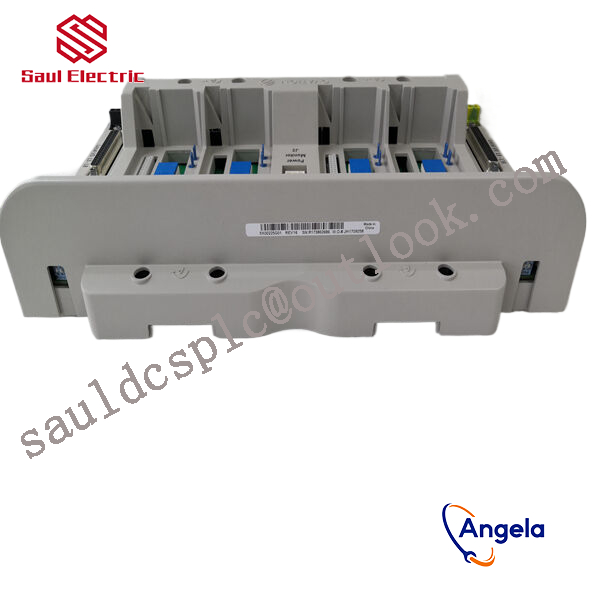
responsible for processing signals from on-site sensors or driving actuator actions. For example, they may need to cooperate with devices such
as BANNER travel switch T30UIPB to receive their transmitted position signals; Or by controlling components such as Burkert solenoid valve 00131421, the on/off of fluid media can be precisely managed.
these modules integrate more complex logic processing capabilities. The core task of a pressure switch is to detect whether the pressure
has reached a preset threshold and output a switch signal. Its function is highly specific and fixed. And modules 5X00300G02 and 1
C31219G01 have the ability to comprehensively judge multiple such switch signals and transmitter signals (such as transmitter 1066-P-HT-60),
and output complex control instructions according to internal logic.