


Description
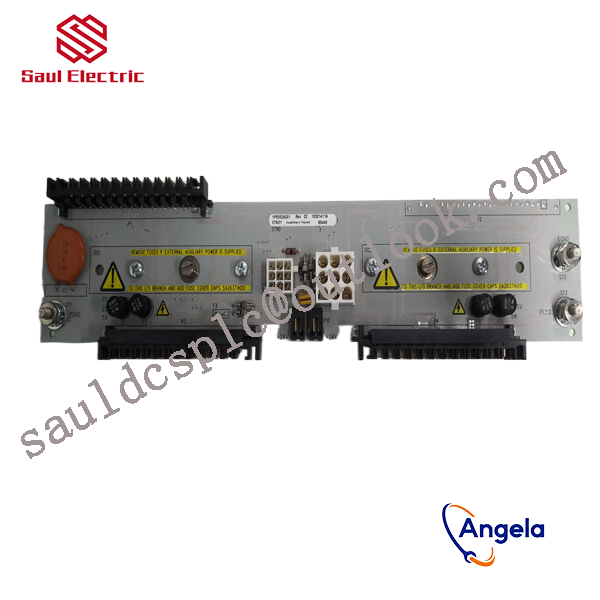
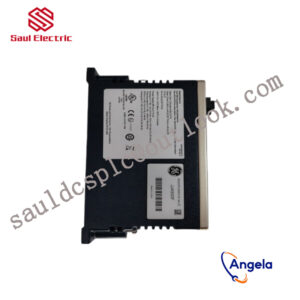
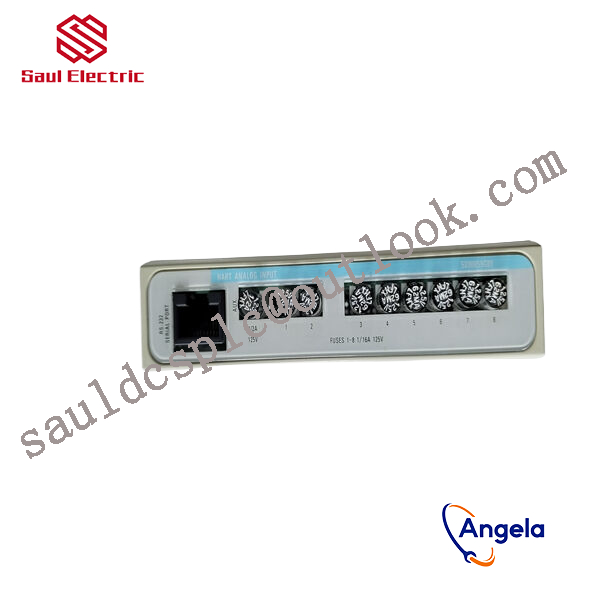
1C31110G02 Emerson Ovation Electromagnetic Output
thereby controlling external devices or circuits.
The PID controller (Proportional Integration Differentiation) consists of a proportional unit P, an integral unit I, and a derivative unit D. By setting the three parameters Kp, Ki, and Kd. The PID controller is mainly suitable for systems with basic linearity and dynamic characteristics that do not change over time. This article first introduces the working principle of the PID controller, followed by the input and output of the PID controller, and finally introduces the parameter tuning and control implementation of the PID controller. Follow the editor to learn more about it.
The working principle of PID controller
PID controllers are widely used in industrial process control. Approximately 95% of closed-loop operations in the field of industrial automation use PID controllers. The controllers are combined in such a way as to generate a control signal. As a feedback controller, it provides control output to the desired level. Before the invention of microprocessors, PID control was implemented using analog electronic components. But today all PID controllers are processed by microprocessors. Programmable logic controllers also have built-in PID controller instructions.
By using a low-cost simple switch controller, only two control states are possible, such as fully open or fully closed. It is used for limited control applications, and these two control states are sufficient to control the target. However, the oscillation characteristics of this control limit its use and are therefore being replaced by PID controllers.
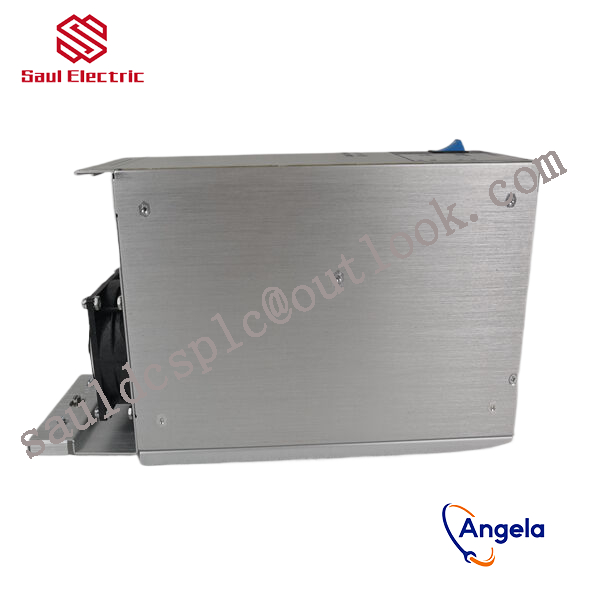
responsible for processing signals from on-site sensors or driving actuator actions. For example, they may need to cooperate with devices such
as BANNER travel switch T30UIPB to receive their transmitted position signals; Or by controlling components such as Burkert solenoid valve 00131421, the on/off of fluid media can be precisely managed.
these modules integrate more complex logic processing capabilities. The core task of a pressure switch is to detect whether the pressure
has reached a preset threshold and output a switch signal. Its function is highly specific and fixed. And modules 1C31110G02 and 1
C31219G01 have the ability to comprehensively judge multiple such switch signals and transmitter signals (such as transmitter 1066-P-HT-60),
and output complex control instructions according to internal logic.